Building the Inference Cloud, and What Comes Next

CEO, DigitalOcean
- Published:
- 4 min read
2025 was a defining year for DigitalOcean, not only because we shipped more products and features than ever before, but because we solidified our vision about what the next era of cloud and AI will look like. We supported customers as they ran inference at scale, launched new products, engaged with our community in-person and online, and built out our inference cloud, which gives digital native enterprises and AI-native businesses the power to integrate AI and cloud workflows through one unified platform.
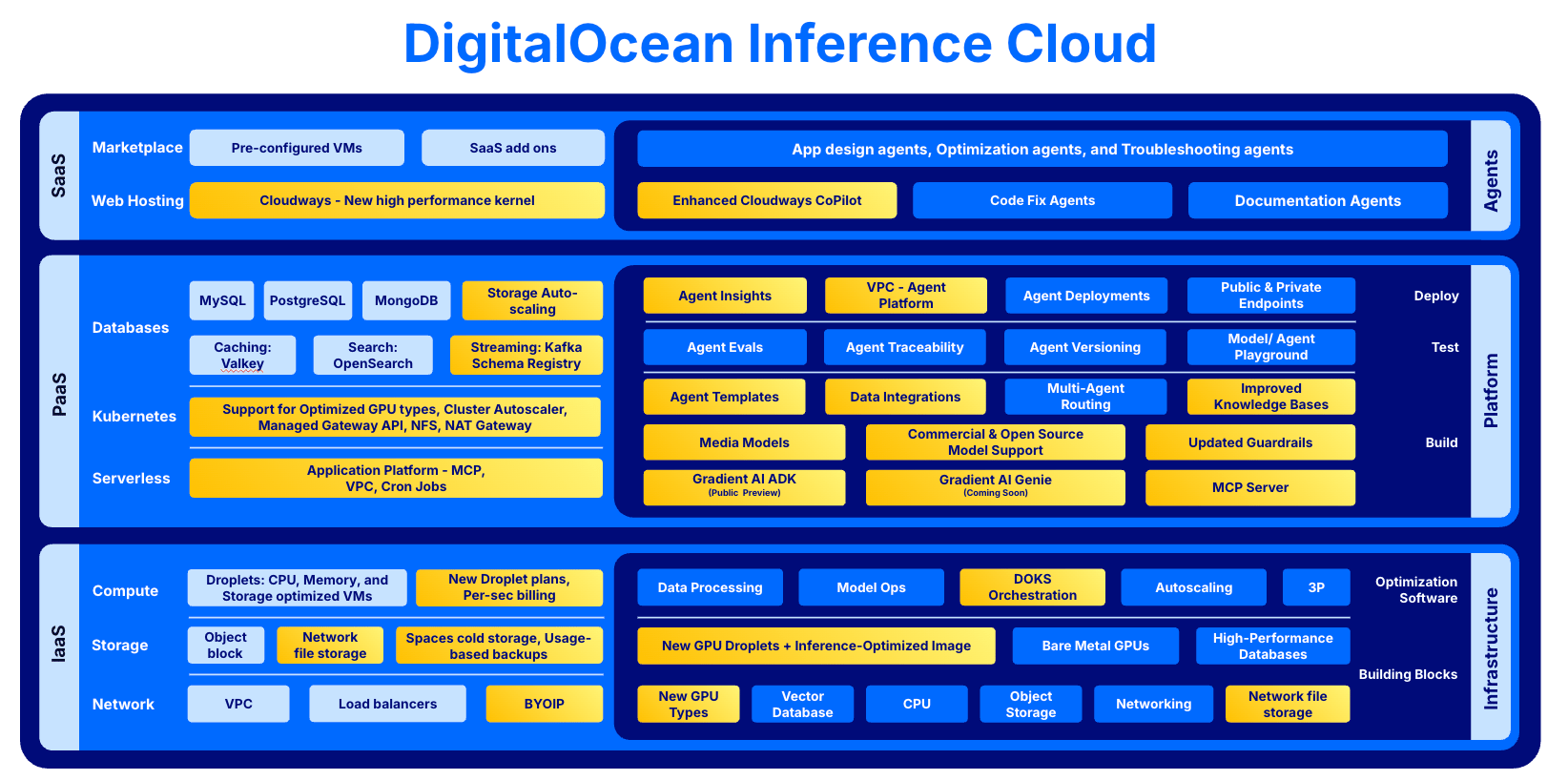
At DigitalOcean, we know our customers are busy working on the same things we are—innovating with speed, integrating AI into their applications, and navigating rapid industry changes. Developers and digital native enterprises don’t want complexity, they want the ability to build quickly, scale with ease, and create with AI without requiring additional resources or time. Everything we built in 2025 was guided by those principles, and I can’t wait to share our 2026 plans with you soon.
AI built for today’s businesses
AI crossed an important threshold in 2025, becoming foundational to the work of not only large enterprises, but also digital native enterprises and startups. Our upcoming Currents research report confirms this, showing that 52% of organizations are actively implementing AI solutions, optimizing AI performance, or treating AI as a core component of their business strategy, compared to 35% who said the same in 2024.
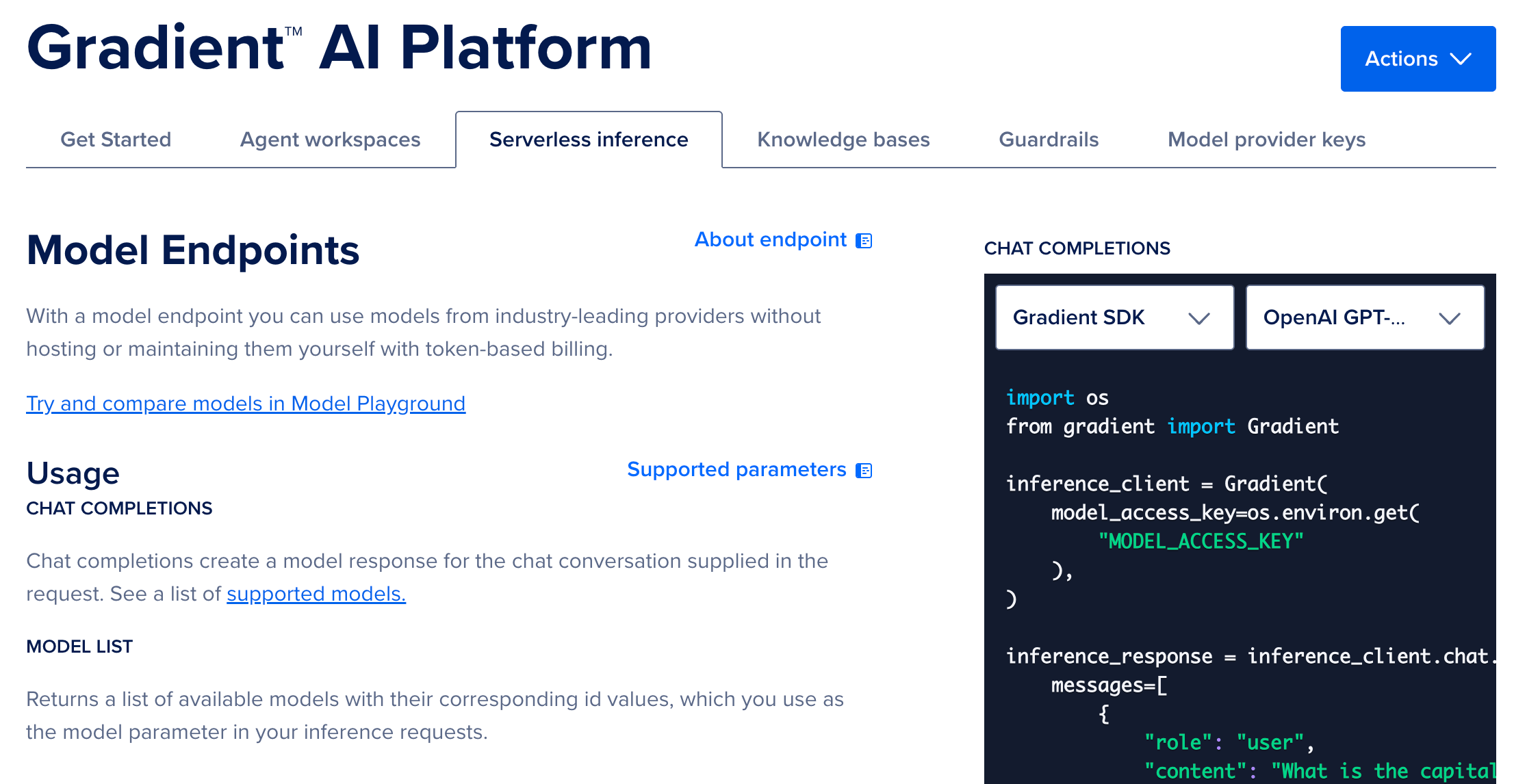
Our mission in 2025 was to make AI as simple and accessible as possible to cloud builders. To that end, in January we launched DigitalOcean Gradient AI Platform, and rapidly expanded its capabilities over the course of the year. The Gradient AI Platforms enables builders to:
-
Build scalable AI agents: Deploy AI tools tailored to your specific needs using hosted third party LLMs, RAG workflows, and function calls.
-
Seamlessly integrate with workflows: Embed agents into your applications through APIs or chatbot plugins.
-
Leverage guardrails: Utilize customizable guardrails to help you filter out harmful content.
-
Optimize efficiency: Transition seamlessly from prototyping to production-ready solutions.
-
Use serverless inference: Direct, flexible access to industry-leading models.
We also expanded our inference capabilities, launching powerful new GPUs including the NVIDIA H200, and AMD MI300X, as well as machines such as the RTX 400 and L40s that are ideal for teams who are experimenting and prototyping. We also added DigitalOcean Kubernetes support for GPU Droplets, so customers can deploy GPU-accelerated workloads on DigitalOcean Managed Kubernetes using our latest GPU Droplet types.
Finally, we launched our AI-optimized data center in Atlanta, which is built to support DigitalOcean’s growing GPU capacity through a state-of-the-art facility.
The next evolution of Droplets, networking, and accounts
DigitalOcean was built on the idea that cloud infrastructure should be predictable, transparent, and fast to set up, and that starts with our signature Droplet virtual machines. In 2025, we expanded the capabilities of Droplets and announced these changes:
-
Per-second billing for Droplets — precision pricing for modern workloads
-
New Dedicated Droplet plans for consistent, high-performance use cases
-
Bring Your Own IP (BYOIP) to simplify migrations
-
VPC NAT Gateway for cleaner, more secure architectures

We also added critical security and account updates, including Single Sign-On for more secure log-ins, and DigitalOcean Organizations, a comprehensive account layer for better billing control and intuitive account hierarchy. These aren’t just incremental tweaks. They’re about aligning the cloud with how developers build today and ensuring we’re providing customers with the tools they need.
Enhanced storage for larger workloads
As applications mature, storage needs change. In 2025, we expanded storage so it grows alongside our customers, without becoming another system to manage.
We launched:
-
Cold storage for low-cost, long-term retention of infrequently accessed data
-
Network File Storage (NFS) for high performance AI workloads
-
Usage-based backups that stay simple and cost-efficient
-
Storage autoscaling for managed databases
These enhancements to our storage portfolio have been frequently requested by our customers in order to better manage their data management and protection as they grow.
The AI Ecosystem to expand your reach
No platform exists in isolation, and we’re pleased to partner with other leaders in the AI and cloud space to bring the newest and best innovations to our customers. This year we announced our AI Ecosystem, which encompasses a full suite of tools for AI development, including AMD and NVIDIA GPUs, and access to advanced models from leading companies like OpenAI, DeepSeek, Meta, Mistral, and fal.ai. Our revamped AI startup ecosystem enables us to support growing AI startups throughout their journey.
We also saw many of our customers, including at DigitalOcean Deploy in Austin and London, and heard how companies like Traversal are scaling using DigitalOcean products including Gradient AI GPU Droplets and Serverless Inference.
2026 is the year of the inference cloud
2025 was about building a foundation by releasing significant product updates in AI and cloud and expanding our partnerships to better serve the fast-growing businesses who build on DigitalOcean today. But 2026 is where it will all come together. Our strong foundation is now built, and we have plans for even more expansion in AI, including the upcoming release of NVIDIA HGX™ B300 GPUs. In 2026 we’re excited to support larger customers with additional AI-native workflows and tighter integration across our products, build deeper partnerships across the AI and cloud ecosystems, and engage with customers and developers at events across the country.
About the author

As Chief Executive Officer, Paddy Srinivasan drives the strategic direction for DigitalOcean. With over 25 years of experience in technology leadership and a proven track record of delivering customer-centric solutions, Srinivasan brings invaluable expertise to further DigitalOcean's mission of simplifying cloud computing.
Related Articles

How DigitalOcean Manages Credentials for Autonomous Agents
- September 28, 2026
- 8 min read

The agent-first cloud: why we built Managed Agents
- September 25, 2026
- 9 min read

Outperforming Fable 5 at half the price: meet model synthesis, a new server-side tool on DigitalOcean Inference Engine
- July 23, 2026
- 8 min read