• Blog
  • Docs
  • Careers
  • Get Support
  • Contact Sales
DigitalOcean
  • Featured AI Products

    Compute

    Build, deploy, and scale cloud compute resources

    Containers and Images

    Safely store and manage containers and backups

    Managed Databases

    Fully managed resources running popular database engines

    Management and Dev Tools

    Control infrastructure and gather insights

    Networking

    Secure and control traffic to apps

    Security

    Help protect your account and resources with these security features

    Storage

    Store and access any amount of data reliably in the cloud

    Browse all products

  • AI/ML

    CMS

    Data and IoT

    Developer Tools

    Gaming and Media

    Hosting

    Security and Networking

    Startups and SMBs

    Web and App Platforms

    See all solutions

  • Community

    Documentation

    Developer Tools

    Get Involved

    Utilities and Help

  • Become a Partner

    Marketplace

  • Pricing
  • Log in
  • Sign up
  • Log in
  • Sign up

Company

  • About
  • Leadership
  • Blog
  • Careers
  • Customers
  • Partners
  • Referral Program
  • Affiliate Program
  • Press
  • Legal
  • Privacy Policy
  • Security
  • Investor Relations

Products

  • Knowledge Bases
  • GPU Droplets
  • Bare Metal GPUs
  • Inference Engine
  • Data & Learning
  • Evaluations
  • Model Library
  • Droplets
  • Kubernetes
  • Functions
  • App Platform
  • Load Balancers
  • Managed Databases
  • Spaces
  • Block Storage
  • Network File Storage
  • API
  • Uptime
  • Cloud Security Posture Management (CSPM)
  • Identity and Access Management (IAM)
  • Cloudways
  • View all Products

Resources

  • Community Tutorials
  • Community Q&A
  • CSS-Tricks
  • Write for DOnations
  • Currents Research
  • DigitalOcean Startups
  • Wavemakers Program
  • Compass Council
  • Open Source
  • Newsletter Signup
  • Marketplace
  • Pricing
  • Pricing Calculator
  • Documentation
  • Release Notes
  • Code of Conduct
  • Shop Swag

Solutions

  • AI Training GPU
  • GPU Inference
  • VPS Hosting
  • Website Hosting
  • VPN
  • Docker Hosting
  • Node.js Hosting
  • Web Mobile Apps
  • WordPress Hosting
  • Virtual Machines
  • View all Solutions

Contact

  • Support
  • Sales
  • Report Abuse
  • System Status
  • Share your ideas

Company

  • About
  • Leadership
  • Blog
  • Careers
  • Customers
  • Partners
  • Referral Program
  • Affiliate Program
  • Press
  • Legal
  • Privacy Policy
  • Security
  • Investor Relations

Products

  • Knowledge Bases
  • GPU Droplets
  • Bare Metal GPUs
  • Inference Engine
  • Data & Learning
  • Evaluations
  • Model Library
  • Droplets
  • Kubernetes
  • Functions
  • App Platform
  • Load Balancers
  • Managed Databases
  • Spaces
  • Block Storage
  • Network File Storage
  • API
  • Uptime
  • Cloud Security Posture Management (CSPM)
  • Identity and Access Management (IAM)
  • Cloudways
  • View all Products

Resources

  • Community Tutorials
  • Community Q&A
  • CSS-Tricks
  • Write for DOnations
  • Currents Research
  • DigitalOcean Startups
  • Wavemakers Program
  • Compass Council
  • Open Source
  • Newsletter Signup
  • Marketplace
  • Pricing
  • Pricing Calculator
  • Documentation
  • Release Notes
  • Code of Conduct
  • Shop Swag

Solutions

  • AI Training GPU
  • GPU Inference
  • VPS Hosting
  • Website Hosting
  • VPN
  • Docker Hosting
  • Node.js Hosting
  • Web Mobile Apps
  • WordPress Hosting
  • Virtual Machines
  • View all Solutions

Contact

  • Support
  • Sales
  • Report Abuse
  • System Status
  • Share your ideas
© 2026 DigitalOcean, LLC.Sitemap.
Community

February's TopDrop

author

By DigitalOcean

  • Published: February 2, 2014
  • 2 min read
<- Back to blog home

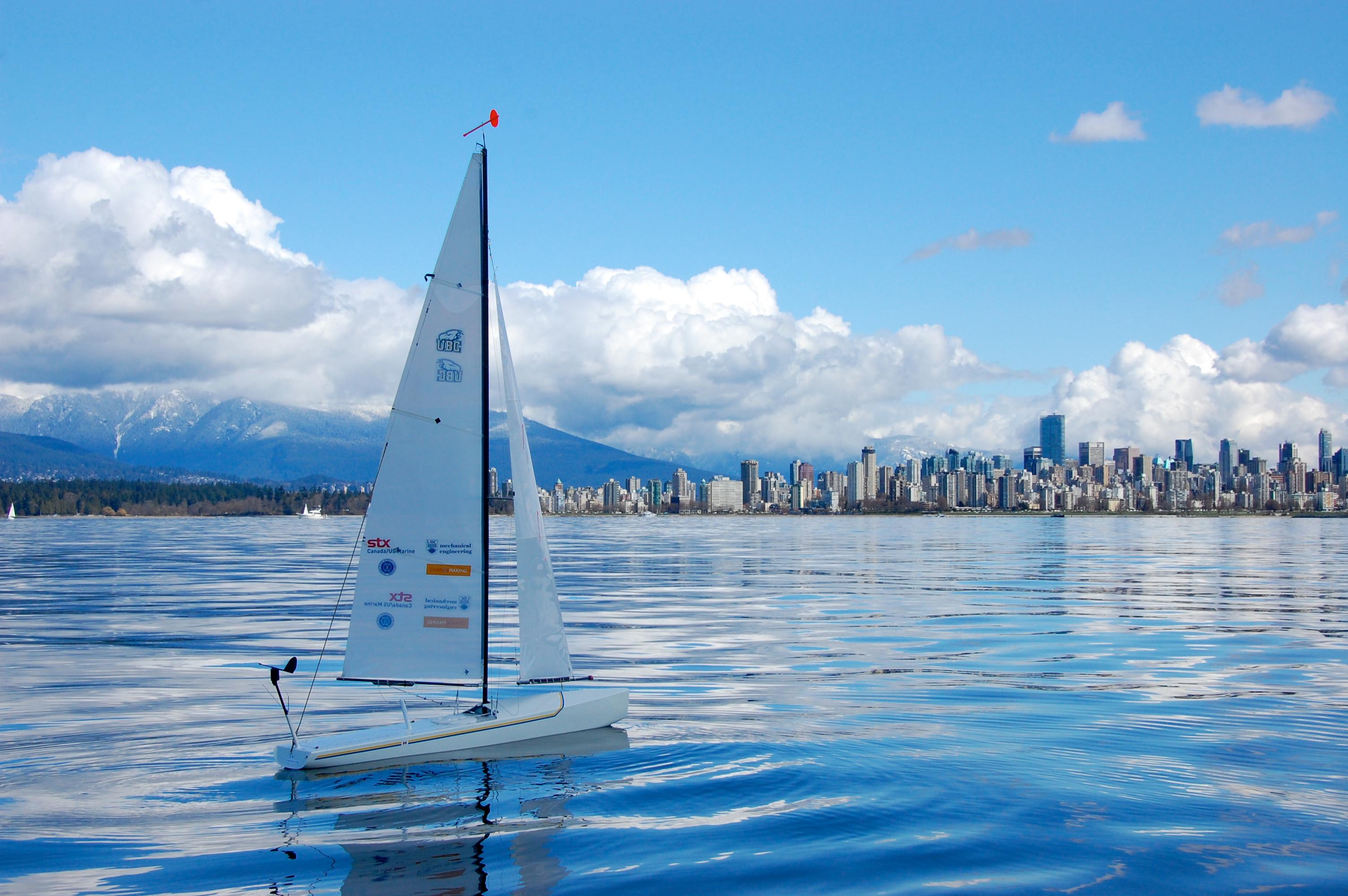
February’s #TopDrop features UBC SailBot – a student team dedicated to designing and building a robotic sailboat [SailBot] to compete in the Microtransat Challenge – that will attempt to set a world record by crossing the Atlantic Ocean.

Winning last year’s SailBot 2013 International Robotic Sailing Regatta with a perfect score, the team’s motivation is neither class credit nor financial gain; simply put, UBC Sailbot is passionate about complex programming, advanced electronics, and sailing. Their inolvement with robotic sailing has become an important part of their engineering education, and is a large contributor to their knowledge of engineering principles, naval architecture, mechatronics, and teamwork.
regatta

The team consists of over 40 students at the University of British Columbia. With support from industry mentor and yacht designer Don Martin, these students design, manufacture, test, and race high-performance robotic sailboats. Over the past three years, the UBC team has had impressive results in the annual International SailBot Championships: 2nd in 2011, 1st in 2012, and most recently in 2013 where team again captured 1st place – this time with a perfect score of 50 / 50.

To put things in perspective: the US Navy placed 2nd that year.

The UBC SailBot team has certainly proven their ability to take on the best teams in the world. So what made these first class engineers migrate to DigitalOcean? According to team member Josh Andrews,

“Our requirements for hosted computing power changed drastically this year. We went from only needing a blog, to needing a reliable place that could drive all of our various testing and public facing needs. When looking into different ideas for how to do this, DigitalOcean quickly rose to the top of the stack in terms of both speed and price. We also love SSDs!”
sailboat

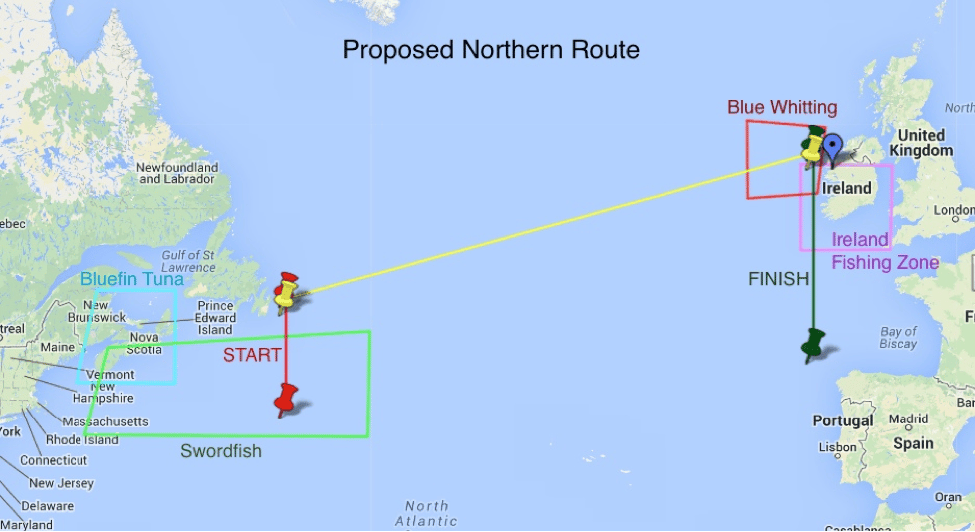
The team will utilize a DigitalOcean droplet for tracking, blogging, project management, and testing. Their present aspiration is to cross the Atlantic autonomously, from Newfoundland to Ireland. When the boat starts its journey, its main point of contact will be with the droplet: information such as location and current telemetry data will be sent over satellite to the VPS, and all data will be displayed on the team’s tracking page.

They will also use the droplet extensively during testing, and when in range of GSM the team will use those networks instead of satellite to send information to the debug page also hosted on the VPS. This information consists of more granular data than sent over satellite, including the current state of the boat and sensors as well as the information sent from the algorithms running the control logic.

Follow UBC SailBot on Twitter [@UBCSailbots] and cheer them on as they cross the ocean!

cross the ocean

Submit your project using the hashtag #TopDrop on Twitter, Facebook, or Google+.

About the author

DigitalOcean
DigitalOcean
Author

Share

  • Community

Start building today

From GPU-powered inference and Kubernetes to managed databases and storage, get everything you need to build, scale, and deploy intelligent applications.
Sign up

Related Articles

Open by Design: How NVIDIA and DigitalOcean Are Building the Stack for the Always-On Agentic Era
Community

Open by Design: How NVIDIA and DigitalOcean Are Building the Stack for the Always-On Agentic Era

Jess Lulka
  • June 2, 2026
  • 7 min read

Read more

AI Disruptors: How the Next Generation of Business is Being Built
Community

AI Disruptors: How the Next Generation of Business is Being Built

Dinesh Murthy
  • May 29, 2026
  • 8 min read

Read more

Heroku’s Next Chapter Is Maintenance. Yours Shouldn’t Be
Community

Heroku’s Next Chapter Is Maintenance. Yours Shouldn’t Be

Wade Wegner
  • February 9, 2026
  • 5 min read

Read more