Top 10 Vultr Alternatives for Businesses in 2026

By Jess Lulka
Content Marketing Manager
- Updated:
- 17 min read
If you’re considering Vultr, you already know the appeal of virtual private server (VPS) hosting: fast setup, affordable pricing, and the freedom to spin up compute wherever you need it. The provider appeals to developers running web apps, APIs, side projects, or lightweight production workloads that don’t require the overhead of a hyperscaler. But every team’s needs are a little different, and what works great for one stack might feel limiting or overly pricey for another.
That’s why it’s worth exploring Vutlr alternatives. Some providers lean into offering a simpler UX and predictable billing, others offer managed services or GPUs for AI/ML workloads, and additional options focus on global reach or higher-touch support. Comparing Vultr against other cloud hosting alternatives helps you land on your sweet spot for cost, performance, and ease of use—so your infrastructure automatically responds to workflow changes, and isn’t something you have to constantly wrestle with.
Key takeaways:
-
Vultr is a VPS provider designed to support web applications, production workloads, and development projects.
-
Developers often use Vultr for its cost-effectiveness, speedy spin-up time, and root administration access to VPSes.
-
When selecting a Vultr alternative, consider support, ease of use, customization capabilities, core functionalities, and cost.
-
Top Vultr alternatives include DigitalOcean, Akamai Cloud (Linode), IBM Cloud, AWS, Google, Microsoft Azure, Alibaba Cloud, Scaleway, OVHcloud, and Hetzner.
What is Vultr?
 Vultr is a North American cloud provider that offers virtual private servers, bare-metal cloud instances, block storage, and cloud GPUs. It operates 32 global cloud data center regions to deploy infrastructure wherever you require low latency for real-time applications such as AI, machine learning, or data analytics. Vultr provides full root administration access and dedicated IP addresses for all virtual machines and supports multiple Linux distributions (CentOS, Debian, Ubuntu) for open source configurations. You can also use the Vultr API to automate deployments, scale infrastructure, and integrate Vultr setups with CI/CD pipelines.
Vultr key features:
-
Managed Kubernetes hosting environment that helps with workload scaling, management, and load balancing without the need for manual Kubernetes configuration.
-
Custom ISO feature for uploading your own operating system (or choosing one from the ISO library) to run on Vultr infrastructure.
-
SOC 2+ PCI, CSA Star Level 1, ISO 2000, and ISO 27001 certified infrastructure available for specialized industries and use cases. Built with HIPAA and GDPR in mind.
- Vultr uses a pay-as-you-go pricing model, charging for infrastructure by the hour. Pricing will depend on your configuration and the type of compute you deploy.
Benefits of Vultr alternatives
During the VPS alternatives evaluation process, consider what features you need the most, what the developer experience should be, and how much you want the cloud provider to manage. Some reasons to opt for a Vultr alternative may include:
-
Expansive support: Vultr primarily offers ticket-only support and technical documentation for troubleshooting issues. Many alternative providers offer hands-on, live customer support so you can talk to technical staff to troubleshoot issues via email, phone, or video.
-
Reduced learning curve: The platform can take time to set up and configure, and may require more technical knowledge than some other providers who offer pre-configured, fully managed configurations. Alternatives might also be more user-friendly for those who have less technical experience with VPS setup and configuration.
-
Better performance: Vultr focuses on having high-performance computing available for its customers, though some users have reported it can encounter issues with “noisy neighbors” (VMs or resources in a multi-tenant data center that reduce performance for other VMs), intermittent packet loss, and blocked SMTPs. Various market options offer the ability to deploy private servers on dedicated hardware to reduce traffic noise and maintain overall performance. Results may vary based on each customer’s specific environment, system configuration, data inputs, and usage
-
Managed services: Vultr alternatives may provide a wider set of managed services and products, including databases, backups, migration, and Kubernetes. This can make it easier for you to decide what you want your cloud provider to oversee and upkeep day-to-day—and what features of your VPS you want to have control over and customize.
-
Expanded configuration offerings: Even backed by Vultr’s global data center network, not all high-end plans (such as bare metal GPU offerings) are as widely available. This means other providers might be more suitable, depending on how widely they can support both high-performance and entry-level compute configurations.
Factors to consider when choosing a Vultr alternative
Choosing a cloud services provider is a crucial decision that can impact many aspects of business operations—especially the infrastructure on which you run applications. These are some of the main considerations to keep in mind when evaluating Vultr competitors:
-
Customization capabilities: How much do you want to manage your own infrastructure and servers? What are the configuration and management options? Do you have the option to change them after deployment, or are they preconfigured? Having the ability to customize CPU, memory, and storage allocations can be useful depending on your application requirements.
-
Core functionalities: What does the provider offer beyond VPS deployment? Consider the overall product portfolio to understand available infrastructure management and maintenance services.
-
Developer experience: Managing cloud infrastructure can be tedious, but a user-friendly interface can significantly streamline your workflow. Consider how easy it is to maintain your cloud servers, monitor usage, and make changes. Providers that offer simple control panels, CLIs, and APIs typically help developers get their job done faster.
-
Community and documentation: Solid documentation and reliable support can save countless hours of frustration. Look for providers that offer comprehensive tutorials that provide easy self-service troubleshooting so you can easily address technical issues. Look for a provider that supports developers with tutorials and actively works to build out a community so you can collaborate with other developers.
-
Cost: It’s important to compare pricing structures across providers to understand what you’ll be paying for. Keep in mind that the cheapest option may not always provide the best value, and think about how your cost may scale over time, especially if you use a large amount of egress or bandwidth.
Top 10 Vultr alternatives
Pricing and feature information in this article are based on publicly available documentation as of February 2026 and may vary by region and workload. For the most current pricing and availability, please refer to each provider’s official documentation.
While Vultr provides VPSes, there are other managed cloud alternatives that businesses may want to consider, offering additional benefits. These options include a mix of hyperscaler clouds and specialized providers:
| Software provider | Best for* (use cases) | Key features | Pricing |
|---|---|---|---|
| DigitalOcean | Developer tools for AI/ML workloads and cloud infrastructure | Intuitive control panel; Droplets (VMs); Managed Databases; App Platform (PaaS); Managed Kubernetes; object/block storage; 24/7 support; extensive documentation and tutorials | Transparent pricing; innovative monthly plans; optional accessible support tiers |
| Akamai Cloud (previously Linode) | Straightforward VPS hosting with minimal overhead | Simple pricing; solid performance; Linux-friendly; VPS-focused infrastructure | Predictable monthly pricing; value-oriented |
| IBM Cloud | Hybrid deployments for regulated industries | Broad enterprise portfolio; AI/ML tooling; strong compliance and security focus | Enterprise-oriented pricing; limited free support |
| Amazon Web Services (AWS) | Global deployments and customizable architectures | Large service catalog; global regions/AZs; deep integrations; mature ecosystem | Usage-based and highly granular; costs can be complex; paid support plans |
| Google Cloud Platform | Kubernetes-native and cloud-native application support | BigQuery; strong AI/ML stack; fast networking; Kubernetes leadership | Usage-based; bandwidth/egress charges can scale quickly |
| Microsoft Azure | Hybrid Windows environments and Microsoft-focused infrastructure | Tight Microsoft integrations; enterprise compliance; hybrid/on-prem connectivity; broad services | Usage-based; complex enterprise pricing structure |
| Alibaba Cloud | APAC and China-focused business deployments | Strong APAC footprint; full cloud suite; regional optimization | Usage-based; competitive regional pricing |
| Scaleway | Bare metal and cloud compute combinations | Bare metal servers; storage and databases; EU data centers only | Competitive pricing; Europe-centric availability |
| OVHcloud | Private cloud deployments in Europe | Dedicated servers; private cloud; strong EU presence | Budget-friendly; enterprise-style plans |
| Hetzner | Ultra-low-cost compute and simple VPS hosting | Extremely affordable; compute-focused; minimal managed services | Very low-cost pricing; limited managed features |
*This “best for” information reflects an opinion based solely on publicly available third-party commentary and user experiences shared in public forums. It does not constitute verified facts, comprehensive data, or a definitive assessment of the service.
Developer-focused, specialty providers
There are plenty of cloud hosting options for developers. These providers offer a variety of configurations and customizable VPS solutions so that you can either quickly spin up an instance to get your workloads online or dig into the details to optimize your server exactly for your specialized use cases.
DigitalOcean with dev tools for AI/ML workloads, cloud infrastructure
 DigitalOcean’s cloud computing offerings are designed for digital-native enterprises and AI startups seeking scalable, straightforward infrastructure. Its Virtual Private Cloud (VPC) product is a logically isolated network that you can control and define how resources communicate with each other for high-speed performance. It’s further customizable in terms of firewall configurations, IP address ranges, and network interconnections. You can easily connect your VPC to DigitalOcean’s portfolio: VPC Peering establishes secure connections between Droplets, managed databases, and DigitalOcean Kubernetes clusters on the same network. To set up a VPC, select a data center region, IP range, name, and description—it’s that straightforward to get started. These offerings are also compliant with SOC 2 Type II, SOC 3 Type II, Cloud Security Alliance STAR Level 1, Global Cross-Border Privacy Rules, and GDPR standards.
DigitalOcean key features:
-
No charge for ingress transfer to VPCs and internal data center VPC peering.
-
Network address translation (NAT) gateway services for centralized outbound internet access, high availability, and scalability.
-
Extended connectivity from any DigitalOcean VPC to any cloud or on-premises network is available with Partner Network Connect.
- DigitalOcean VPC is included with Droplet VMs, which start at $4/month.
Akamai Cloud (Linode) with straightforward VPS hosting and minimal overhead
 Akamai Cloud (previously Linode) offers Linux-based VMs and VPSes that provide scalable computing with SSD storage. Its services portfolio also includes their managed Linode Kubernetes Engine for automatic updates, containerized application scaling, and cluster creation. Connections are available to managed databases from MySQL, PostgreSQL, and MongoDB. You can access resources in 11 regions worldwide and use them with Akamai Cloud’s global CDN edge network.
Akamai Cloud (Linode) key features:
-
Cloud Manager and CLI for web-based and command-line instance management.
-
Rapid deployment for game servers, Docker, LAMP, and WordPress.
-
Longview for server metrics, system performance analytics, and automated backup services.
Akamai Cloud (Linode) pricing:
- The total price for Akamai Cloud (Linode) dedicated compute depends on the amount of RAM, SSD, bandwidth, and monthly data transfer available. Plans start at $45/month for dedicated compute.
Deciding between DigitalOcean, Akamai Cloud (Linode), and Vultr can come down to how much simplicity and predictability you’re looking for with your infrastructure. This DigitalOcean vs Linode vs Vultr comparison breaks down key differences in service focus, performance, and operational experience so you can choose a cloud that aligns with your team’s needs and day-to-day workflows.
IBM Cloud with hybrid deployments for regulated industries
IBM Cloud’s cloud service gives computing power to more technical or regulated use cases. Its Virtual Power Server is a collection of multi-tenant, configurable IBM servers that connect to cloud services, DevOps, and IBM Db2 (AI-powered databases). It can be used for cloud, on-premises, or hybrid deployments, with access to over 250 IBM Cloud Services that can help with capacity management and provisioning. IBM Cloud’s VPS offering supports SAP, Oracle, and IBM i workloads, along with integration of IBM’s watson.ai for AI development and applications.
IBM Cloud key features:
-
Hyper Protect Virtual Servers for Virtual Private Cloud gives you a fully managed, confidential compute container runtime for sensitive workloads in a highly isolated environment.
-
IBM Cloud Code Engine is available for fully-managed serverless, container-based deployments to quickly ship code into production.
-
GPU-based compute offerings are available with NVIDIA, AMD, and Intel hardware for accelerated processing power.
- IBM Cloud pricing entirely depends on your configuration and workload requirements. Contact IBM for a custom quote.
Hyperscaler Vultr competitors
Hyperscaler clouds are another suitable VPS option if you have the internal knowledge and technical capacity to understand their large service portfolios and complicated pricing structures.
Amazon Web Services (AWS) Lightsail with global deployments and customizable architectures
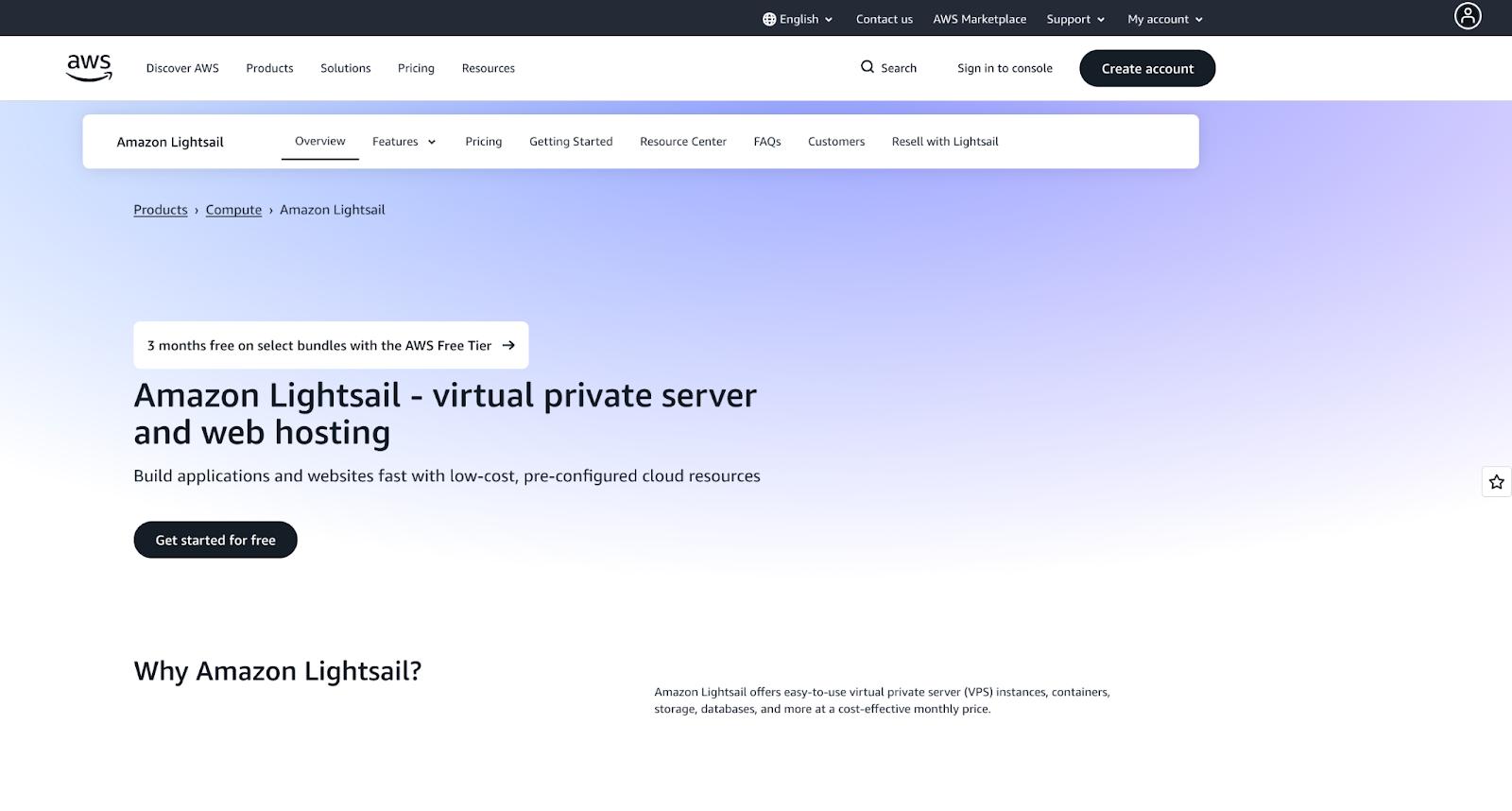 Amazon Lightsail is AWS’s primary VPC offering, designed for Windows and Linux OSes. You can use it alongside other AWS services, including Amazon EC2, RDS databases, and S3 storage. AWS Lightsail includes built-in networking capabilities for firewall rule management, DNS configurations, and static IP addresses. Servers come pre-configured with security, access, and networking components—all of which streamline setup.
AWS Lightsail key features:
-
Access to both virtual machines and containers to host your workloads on whatever infrastructure type fits your requirements.
-
Lightsail offers a number of pre-configured, one-click-to-launch application and developer stacks, including WordPress, Plesk, LAMP, and Node.js.
-
Compatibility with Amazon Linux, Ubuntu, Debian, AlmaLinux, and CentOS Stream 9 OSes.
-
Free Trial - $0/12 months. One year of 50 GB content delivery network (CDN) distributions, a 5 GB object storage bundle, and three months free on select container, instance, and database bundles.
-
Paid Tier - Bundles with public IPv4 addresses start at $5/month. Bundles with IPv6 addresses start at $3.50/month.
Google Cloud Platform with Kubernetes-native and cloud-native application support
 Google Cloud Platform offers VMs to run your workloads and VPCs for isolated network setups. For VMs, select from a pre-defined machine type set up for different application types (including AI/ML) or a custom machine that can include up to 96 vGPUs and 8 GB of memory per core. Google’s VPC option can automatically set up your virtual topology, network policies, and subnet prefix ranges if desired. You can also bring your own IP addresses into the VPC to minimize migration downtime and reduce networking costs.
Google Cloud Platform key features:
-
Secure options with Confidential VMs (encrypted data-in-use), Shielded VMs (protect against rootkits and bootkits), and Assured Workloads.
-
Live migration capabilities that move workloads to the same zone if a VM goes down during production.
-
VPC Flow Logs capture information about IP traffic on Google Compute Engine and support network monitoring, security analysis, and cost optimization.
Google Cloud Platform pricing:
- Google Cloud Platform pricing is custom and depends on your configuration and workloads. Start using Google Cloud Platform products with a free trial for 90 days that includes $300 in credit to use for Compute Engine, VPC, and other products.
Microsoft Azure with hybrid Windows environments and Microsoft-focused infrastructure
Microsoft Azure provides compute via Azure VMs, available across 60+ global regions, supporting Linux and Windows. You’ll also get automatic scaling to meet workload requirements, built-in monitoring and management features, and connected backup storage. For VPC setups, you can launch Azure Virtual Network to integrate your own IP addresses and DNS servers onto Microsoft’s infrastructure for an isolated environment for VMs. You can use Azure’s Virtual Network Manager for network segmentation, mesh network creation, and security management.
Microsoft Azure key features:
-
GPU-enabled and HPC-optimized VMs that support AI and high-performance applications.
-
Azure Boost for enhanced computing performance via specialized NVMe-enabled SSDs, Boost cards, and a trusted platform module.
-
Virtual Network peering and Azure NAT Gateway enable connecting virtual networks and streamline outbound internet connectivity, respectively.
- Microsoft Azure pricing is custom and depends on your configuration and workloads. For VMs, a starting B2 instance with 2 vCPUs and 1 GB of RAM is available as low as $6.13/month.
Azure VM pricing can be complex and time-consuming to understand. We’ve broken it down to give you a clearer picture regarding how costs compare to DigitalOcean Droplets.
Global VPS providers
These Vultr alternatives offer global networks for their products with a high concentration of data centers and infrastructure in Europe or APAC. This can be useful if your organization requires low latency and ready content distribution for these geographical areas.
Alibaba Cloud with APAC and China-focused business deployments
 Alibaba Cloud’s VPS offering provides computing power for various workloads worldwide, with a high concentration of availability regions in China and APAC. Also commonly referred to as a Simple Application Server (SAS), you can use it for turnkey, managed deployments on either Linux or Windows. It includes a management console and an API to connect your workloads to Alibaba Cloud. These VPSes can support website building, container infrastructure, database connections, and cloud storage.
Alibaba Cloud key features:
-
Elastic Compute Service can be used for more complex or high-performance workloads within a dedicated VPC deployment.
-
SAS VPSes can use pre-installed application images (WordPress, LAMP, Node.js) or system images (pure OS).
-
Built-in operation and maintenance capabilities for server monitoring, resource usage, and log management.
-
Linux Images configurations start at $3.50/month.
-
Window Images configurations start at $11/month.
The total price for your SAS will depend on the amount of RAM, SSD, bandwidth, and monthly data transfer available.
Scaleway with bare metal and cloud compute configurations
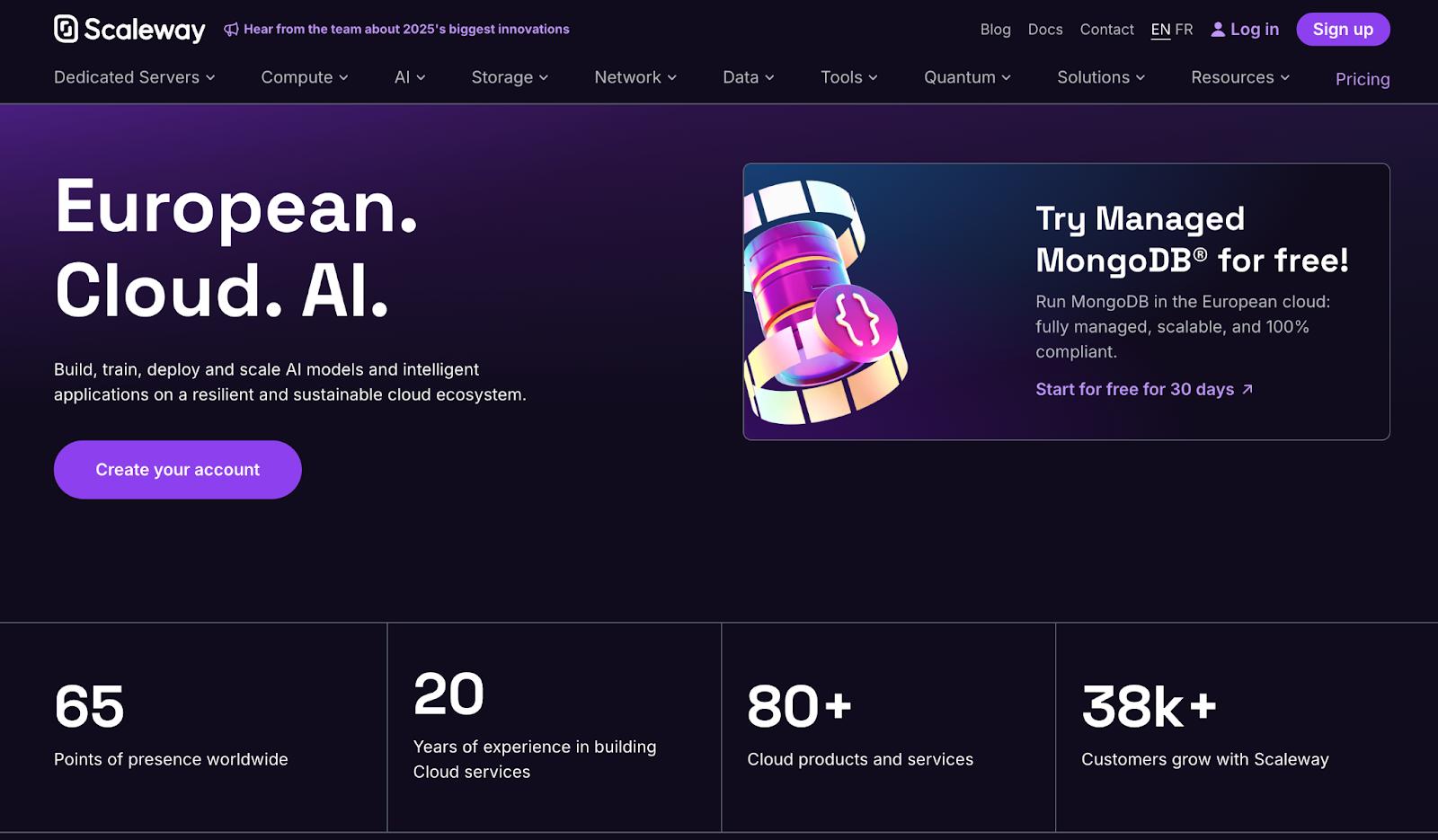 Scaleway’s Dedibox VPS is available in over 60 global locations and includes up to 1 Gbps bandwidth and standard or premium CPUs, depending on your configuration selections. It is commonly used for hosting websites, applications, databases, and development environments. Dedibox VPSes come with full root access, helping to enable full workload customization and specific software configurations. You can also connect it to RPN, Scaleway’s private network for more isolated bandwidth use.
Scaleway key features:
-
Built-in DDoS protection, automatic backups, and dedicated compute resources for consistent performance.
-
Each dedicated server comes with a public IPv4 address with options to purchase additional IP addresses.
-
Managed databases for MySQL and PostgreSQL are available through Scaleway’s private network.
-
Dedibox VPS START - $5.92(€4.99)/month. Standard CPUs, SSD SATA, and available in 60 zones.
-
Dedibox VPS PRO - $9.47(€7.99)/month. Premium CPUs, SSD NVMe, and available in 20 zones.
OVHcloud with private cloud deployments in Europe
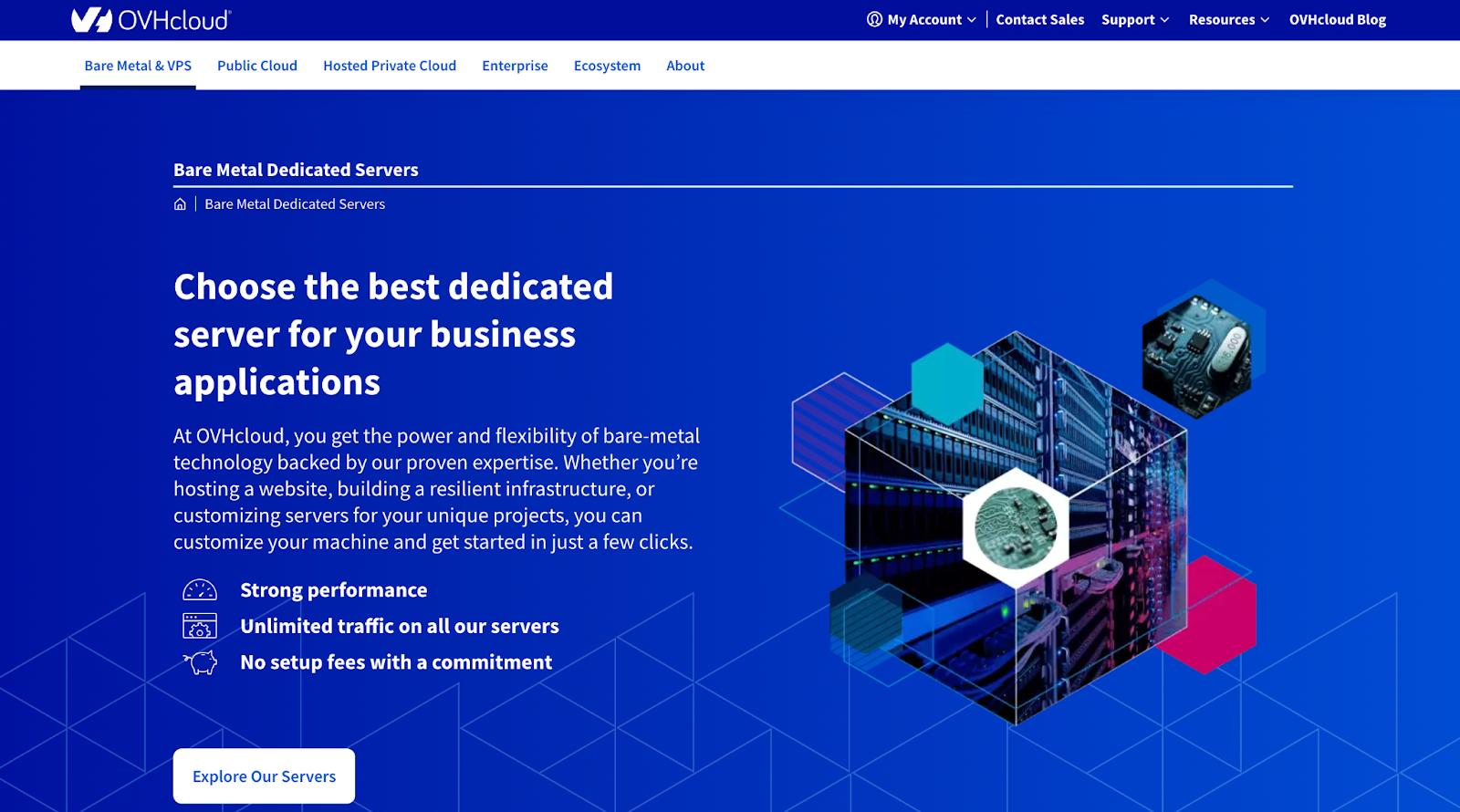
OVHcloud is a France-based provider recognized for its budget-friendly dedicated servers and private cloud offerings. Its VPS offerings include NVMe storage, daily automatic backups, and 1-click scaling for additional resource provisioning. They also include pre-installed applications, monitoring, managed databases, and a network load balancer. There’s an option to select Local Zone VPSes (versus more traditional data center VPSes), which can reduce application latency and includes built-in DDoS protection.
OVHcloud key features:
-
Every server includes 500 Mbps of public bandwidth and unlimited inbound and outbound traffic at no cost.
-
Each server includes a connection to the vRack private network, a private, isolated network for connecting your services across OVHcloud data centers.
-
Compliance with ISO/IEC 27001, 27017, 27018, 27701, CSA Star, SOC 1-2 type 1, and healthcare data hosting (HDS) standards.
-
VPS-1 - $4.20/month. 4 vCores, 8 GB RAM, 75 GB SSD, and 400 Mbps of public bandwidth.
-
VPS-2 - $6.75/month. 6 vCores, 12 GB RAM, 100 GB SSD NVMe, and 1 Gbps of public bandwidth.
-
VPS-3 - $12.75/month. 8 vCores, 24 GB RAM, 200 GB SSD NVMe, and 1.5 Gbps of public bandwidth.
-
VPS-4 - $22.08/month. 12 vCores, 48 GB RAM, 300 GB SSD NVMe, and 2 Gbps of public bandwidth.
-
VPS-5 - $34.34/month. 16 vCores, 64 GB RAM, 350 GB SSD NVMe, and 2.5 Gbps of public bandwidth.
-
VPS-6 - $45.39/month. 24 vCores, 96 GB RAM, 400 GB SSD NVMe, and 3 Gbps of public bandwidth.
Hetzner with low-latency compute and simple VPS hosting
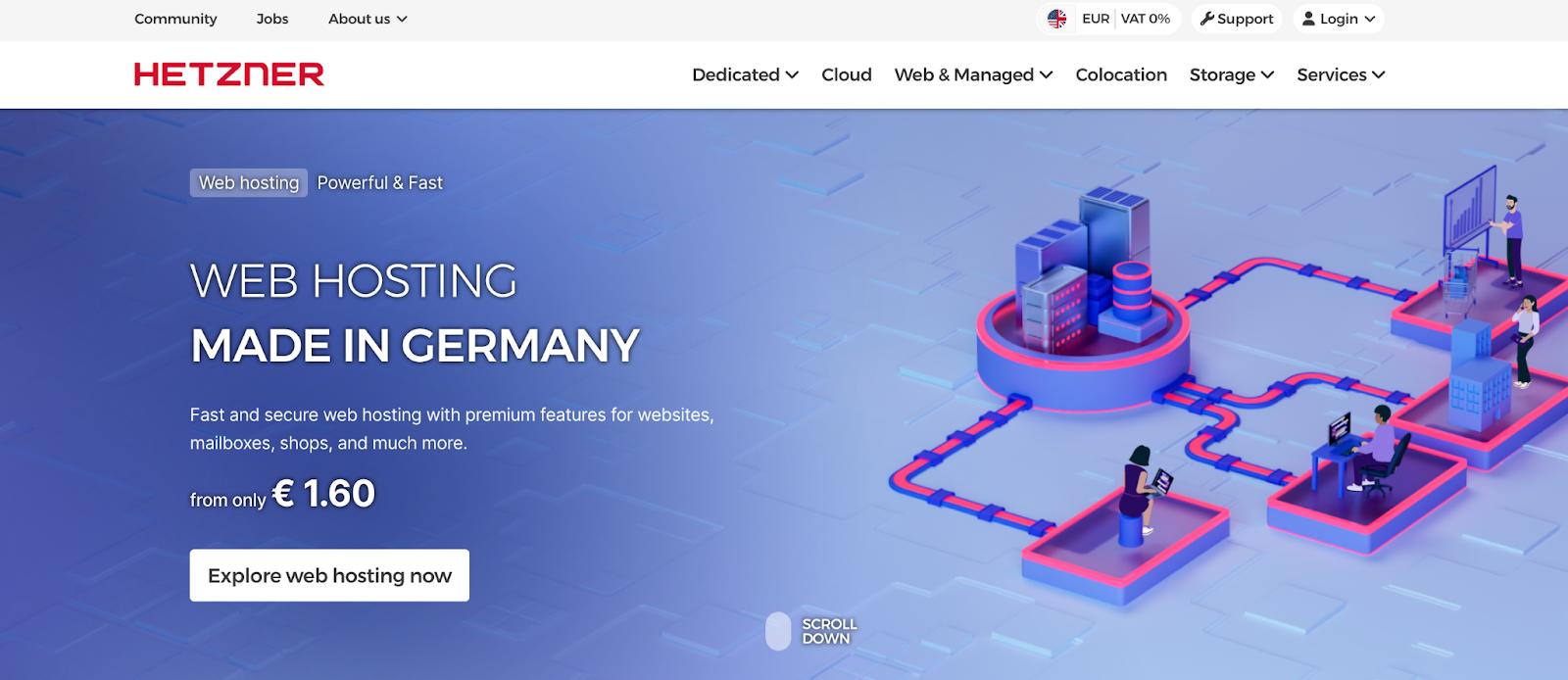 Hetzner is a budget cloud provider based primarily in Germany. Its VPS offerings are designed for low latency, business-critical workloads. Options include the ability to choose configurable servers or select from one of its fully managed servers. Each server comes with at least 20 TB of traffic in the EU and 1 TB in the U.S., along with load balancers to manage traffic over your servers. Hetzner servers are compatible with operating systems that include Ubuntu, Debian, and Fedora Linux distributions, as well as applications such as Docker, WordPress, and Nextcloud.
Hetzner key features:
-
Monitoring available for CPU, disk throughput, disk IOPs, network traffic, and network packets per second (PPS) to easily review overall VPS performance.
-
REST-API and CLI are available with full root access for developers who want to manage infrastructure and have complete control over their server with SSH.
-
DIN ISO/IEC 27001:2022 certified and GDPR compliant across all regions, including the U.S. and Singapore.
- The total price for your Hetzner configuration depends on the amount of RAM, SSD, bandwidth, IP address type, data center location, and monthly data transfer. Dedicated General Purpose servers are available starting at $14.81(€12.49)/month.
Weighing DigitalOcean vs Hetzner for your infrastructure? This comparison highlights differences in service scope, ease of setup, and ecosystem support—giving you a clearer sense of how each provider’s approach to core compute, networking, and tooling fits your team’s workflow and operational needs.
Vultr alternatives FAQ
What are the best Vultr alternatives in 2026?
The best Vultr alternative will depend on your workload requirements and what level of isolation you need for your VPS or VPC. Some top options on the market include specialized cloud providers like DigitalOcean, Akamai Cloud (Linode), Scaleway, OVHcloud, and Hetzner. You may also wish to evaluate hyperscalers that include AWS, Google, Microsoft Azure, and IBM Cloud.
Which Vultr competitor is the cheapest in 2026?
The cheapest Vultr competitors depend on your ideal infrastructure configuration, data center location, and vendor pricing model. DigitalOcean offers a transparent, pay-as-you-go model with Droplets (that include VPC capabilities) starting at $4/month. Other vendors either charge by the hour or pay-as-you-go for whatever resources you use.
Vultr vs. DigitalOcean: Which is better for startups? While Vultr does offer startups quick, cost-effective VPSes that you can spin up quickly, users have reported it as being fairly technical to configure and offering relatively minimal customer support. On the other hand, DigitalOcean provides technical resources that are designed for a friendly developer experience, as well as extensive customer support plans with email, chat, and video call access to technical staff.
What are the top VPS platforms for developers?
The top VPS platforms for developers provide customization when needed, include built-in security measures, and can support a variety of applications. This includes DigitalOcean, Akamai Cloud (Linode), Scaleway, OVHcloud, Hetzner, along with hyperscaler options from AWS, Microsoft, and Google.
How hard is it to migrate from Vultr?
Migrating from Vultr involves manually backing up your data via SSH, snapshotting, or using migration tools, then uploading data to your new cloud provider. DigitalOcean supports open source technology standards for wider support and straightforward migration. You can also work with our migration services team to have experts fully handle the migration process.
DigitalOcean: Your developer-friendly cloud for digital-native enterprises
DigitalOcean is designed to give developers everything they need to build, deploy, and scale modern applications. From virtual machines to fully managed platforms for containers, databases, and AI workloads, DigitalOcean’s cloud computing offerings are designed to be intuitive, flexible, and production-ready. With straightforward, predictable pricing and powerful APIs, you can move from idea to production quickly while staying in control of your infrastructure.
Key features:
- Scalable Droplet (virtual machines) for general compute and custom workloads
- Fully managed Kubernetes, databases, and object storage for production apps
- App Platform for building and deploying applications without managing servers
- GPU-powered infrastructure and AI-ready Droplets for model training and inference
- Managed AI services for building, deploying, and scaling LLM-powered applications
- Global data center regions with built-in networking and security
- Simple control panel, CLI, API, and Terraform support for automation
- Predictable, transparent pricing with no long-term contracts
Get started with DigitalOcean to build reliable applications, scale with confidence, and spend less time managing infrastructure—and more time shipping code.
DISCLAIMER: Any references to third-party companies, trademarks, or logos in this document are for informational purposes only and do not imply any affiliation with, sponsorship by, or endorsement of those third parties.
About the author

Jess Lulka is a Content Marketing Manager at DigitalOcean. She has over 10 years of B2B technical content experience and has written about observability, data centers, IoT, server virtualization, and design engineering. Before DigitalOcean, she worked at Chronosphere, Informa TechTarget, and Digital Engineering. She is based in Seattle and enjoys pub trivia, travel, and reading.
Start building today
From GPU-powered inference and Kubernetes to managed databases and storage, get everything you need to build, scale, and deploy intelligent applications.
