
As a category of tools, AI paraphrasers don’t have the best reputation. This relates to their association with students trying to evade plagiarism detectors or anyone attempting to pass off AI-generated content as human-written. Using these tools without thoughtful inputs or follow-up editing typically produces surface-level rewrites that may sound different but don’t meaningfully improve clarity, accuracy, or originality. Their outputs can also fall short under closer scrutiny, especially when context, nuance, or domain-specific knowledge is relevant, making human review an essential step in any responsible editing workflow.
That said, there are certainly valid reasons to consider using an AI paraphrasing tool:
-
Take convoluted technical documentation and turn it into clear, step-by-step instructions that help developers implement a feature, rather than abandoning it in frustration.
-
Repurposing content, like condensing a 500-word landing page into a concise LinkedIn post or expanding a product blurb into a multi-part email sequence.
-
Smooth out awkward phrasing without losing meaning, which can be helpful for writers in a non-native language.
-
Adapting tone, such as repurposing a formal whitepaper into something more conversational for a blog audience.
Let’s consider how to choose the right AI paraphraser, the trade-offs to weigh between options, and a breakdown of the leading tools on the market.
Key takeaways:
-
AI paraphrasers are versatile tools for rewriting, refining, and improving text throughout the entire content lifecycle.
-
These platforms are valuable for both individual processes and collaborative workflows, helping improve clarity, adjust tone, enforce style consistency, reduce repetitive editing, and maintain readability.
-
To choose your ideal AI paraphraser, consider factors such as rewrite depth, semantic accuracy, integration with existing writing environments, support for team collaboration, and built-in checks for plagiarism or AI-generated content.
-
The top paraphraser tools on the market include QuillBot, Wordtune, Jasper, Superhuman, Smodin, Spin Rewriter, Linguix, and Originality.ai, each offering unique features tailored to different rewriting needs and workflows.
What are AI paraphrasers?
AI paraphrasers are tools that rewrite text while preserving the original meaning and intent. They use natural language processing (NLP) and large language models (LLMs) to restructure sentences, replace phrases, simplify or expand content, or adjust tone. Unlike grammar checkers or spelling tools, paraphrasers focus on recomposition, changing how ideas are expressed rather than correcting errors. This makes them useful for tasks such as exploring multiple ways to express an idea, improving readability, adapting content for different channels, or reworking existing text for new contexts, work that requires rethinking expression rather than simply correcting errors.
How to choose the right AI paraphraser tools
Selecting the right tool depends on the nature of rewriting you need and how it fits into your workflow:
-
Rewrite depth: Decide whether your project requires light edits, such as clarity improvements and tone adjustments, or more substantial sentence-level restructuring. For long-form or technical content, you may need heavy rewrites that transform entire paragraphs while still preserving intent.
-
Use case fit: Multi-purpose assistants are more suitable for creative, marketing, or ideation-heavy workflows where flexibility is crucial. In contrast, academically aligned or clarity-focused tools are designed to maintain precision, reduce ambiguity, and support formal writing standards.
-
Output quality: Look for tools that preserve meaning and reduce distortions, while recognizing that AI paraphrasers can still introduce inaccuracies or subtle shifts in intent, making human review essential. Readability is equally important, but no AI system will consistently match brand voice or editorial standards; some simply offer stronger guardrails than others.
-
Originality and detection needs: Some platforms include plagiarism checks or AI-detection scoring, which can be helpful for workflows like avoiding duplicate content in SEO or ensuring compliance with publishing guidelines. These features shouldn’t be used to bypass academic integrity or misrepresent rewritten text as original work; they’re best applied as safeguards within responsible writing and editing processes.
-
Workflow integration: Choose tools that align with how you already work, whether that’s a browser extension, Google Docs, CMS, or API-based automation. Seamless integration eliminates manual copy-paste steps, keeping your editing pipeline efficient and streamlined.
-
Pricing and limits: Compare the relevant word limits, rewrite modes, and export options across free and paid tiers before committing. Pay attention to whether essential features, such as tone adjustments, citations, or batch processing, are restricted to higher-tier plans and if they ultimately align with your available budget.
Benefits of AI paraphrasers
While they can introduce risks if overused, AI paraphrasers can accelerate rewriting workflows, enhance clarity, and minimize repetitive editing. Let’s explore where they excel:
-
Boosting clarity: AI paraphrasers enhance readability by restructuring sentences and refining phrases, while preserving the original meaning and intent. They can also condense long or complex passages, making content easier for readers to follow.
-
Time savings: These tools can significantly reduce time spent on repetitive rewriting tasks, especially during bulk edits or high-volume content cycles. They also help effectively repurpose content for different channels.
-
Tone control: AI paraphrasers offer multiple tone options and rewrite depths to match desired style, formality, or brand voice requirements. This is especially useful when working with diverse audiences or content types.
-
Content optimization: Many tools automatically identify unclear, wordy, or redundant sections that could benefit from a rewrite. This can create more polished outputs and support ongoing quality improvements across bigger projects.
Challenges of AI paraphraser tools
While AI paraphrasers offer speed and clarity, they come with certain limitations that can affect content quality and originality. Understanding these challenges helps writers use the tools more effectively and avoid unintended issues:
-
Meaning drift: AI paraphrasers may unintentionally alter meaning, especially when dealing with technical, domain-specific, or context-dependent content. This makes manual review essential to ensure the rewritten text accurately reflects the original intent.
-
Factual drift: There is a risk that the tool may add information not present in the source text or subtly alter facts. Writers must verify all rewritten content to prevent hallucinations or inaccuracies from slipping into published work.
-
Detectable AI patterns: Some tools rely heavily on synonym swapping or predictable restructuring, which can introduce detectable AI patterns. These patterns may reduce perceived originality, particularly when evaluated by plagiarism or AI detection systems.
-
Voice dilution: Overuse of paraphrasing tools can smooth out unique stylistic choices, resulting in a final output that feels generic or overly standardized. This can weaken brand voice or personal tone, requiring intentional edits to restore individuality.
AI transcription tools help you convert audio or video files into written text, using advanced speech recognition to achieve high accuracy and speed. Explore the best options to incorporate into your corporate tool stack.
Top 8 AI paraphraser tools
Pricing and feature information in this article are based on publicly available documentation as of January 2026 and may vary by region and workload. For the most current pricing and availability, please refer to each provider’s official documentation.
Not all paraphrasers work the same way: some focus on light clarity edits, others facilitate deep rewrites, and various options offer tone controls or plug directly into your existing work tools. Let’s explore the top 8 AI paraphraser tools across these critical dimensions.
| Tool | Best for | Key features | Pricing |
|---|---|---|---|
| QuillBot | Precision rewriting and meaning preservation | Multiple rewrite modes, tone adjustments, built-in grammar and citation tools, Chrome/Docs integration | Free: $0; Premium: $4.17/month; Team: custom pricing |
| Wordtune | Real-time sentence-level clarity improvements | Rewrite, shorten, expand, tone shifts, contextual suggestions, browser extensions | Basic: $0; Advanced: $6.99/month; Unlimited: $9.99/month |
| Jasper | Brand-consistent marketing content at scale | Templates, tone controls, brand voice, rewrite modes, collaboration features | Pro: $69/month/seat; Business: custom pricing |
| Superhuman (Grammarly) | Tone-aware, context-sensitive document refinement | Rewrite suggestions, tone improvements, grammar, citations, browser, and app integrations | Free: $0; Pro: $11.09/month; Enterprise: custom pricing |
| Originality.ai | Originality scoring and plagiarism prevention | AI-detection scoring, plagiarism checks, rewrite suggestions, readability insights | Pay-as-you-go: $30 one-time; Pro: $12.95/month; Enterprise: $136.58/month |
| Smodin | Multilingual content creation and AI detection | OCR-based text input, image-to-text paraphrasing, AI content detection, custom workflow templates | Writing: $8.10/month; Reviewing: $14.50/month; Ultimate: $17.35/month |
| Spin Rewriter | High-volume article diversification and SEO optimization | ENL semantic rewriting, batch processing, phrase-level and sentence-level spins | Monthly: $47/month; Yearly: $77/month; Lifetime: $497 |
| Linguix | Fast, in-browser sentence rewrites and workflow shortcuts | Sentence rewrite engine, contextual triggers, advanced snippets, writing insights dashboard | Monthly: $30/month; Annual: $11.67/month; 2-Year: $10/month |
Multi-purpose AI writing tools with paraphrasing features
These platforms offer a robust feature set, pairing paraphrasing functionality with grammar correction, tone adjustment, and workflow integrations, such as Chrome extensions or Google Docs plugins. Several offer multiple rewrite modes: formal, casual, shorter, and expanded. They work best for everyday writing tasks, such as refining drafts, cleaning up documentation, or adjusting tone for different audiences.
1. QuillBot for precision rewriting and meaning preservation
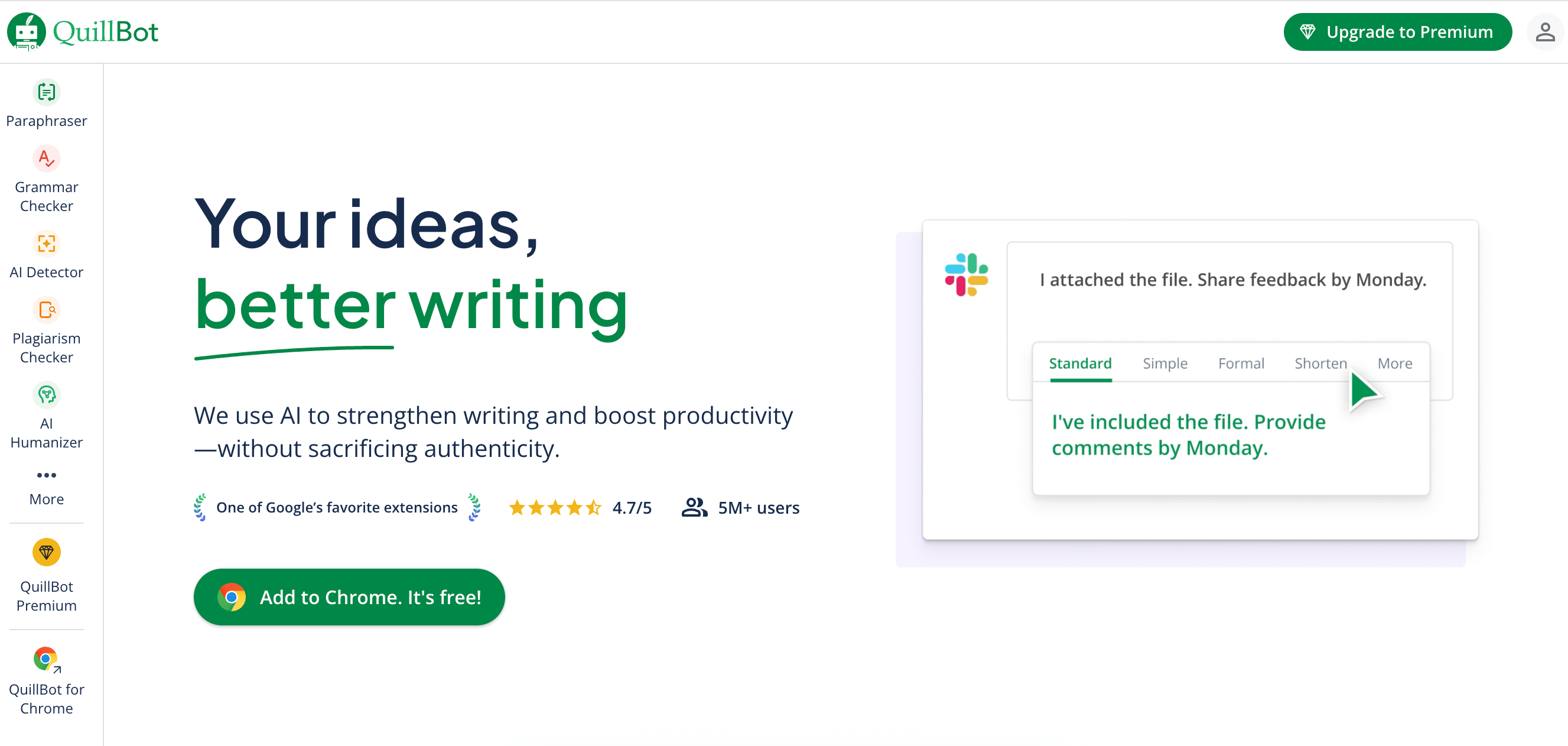
QuillBot was founded in 2017 by three computer science students at the University of Illinois to assist non-native English speakers in improving their writing skills. What started as a simple paraphrasing algorithm has since grown into a full suite of writing tools. The platform combines rewriting, grammar correction, and flow improvements in a single workspace. It is designed to avoid overly aggressive synonym substitution, which helps reduce the risk of unnatural phrasing. QuillBot also integrates with Chrome, Microsoft Word, and Google Docs, making it flexible for everyday drafting.
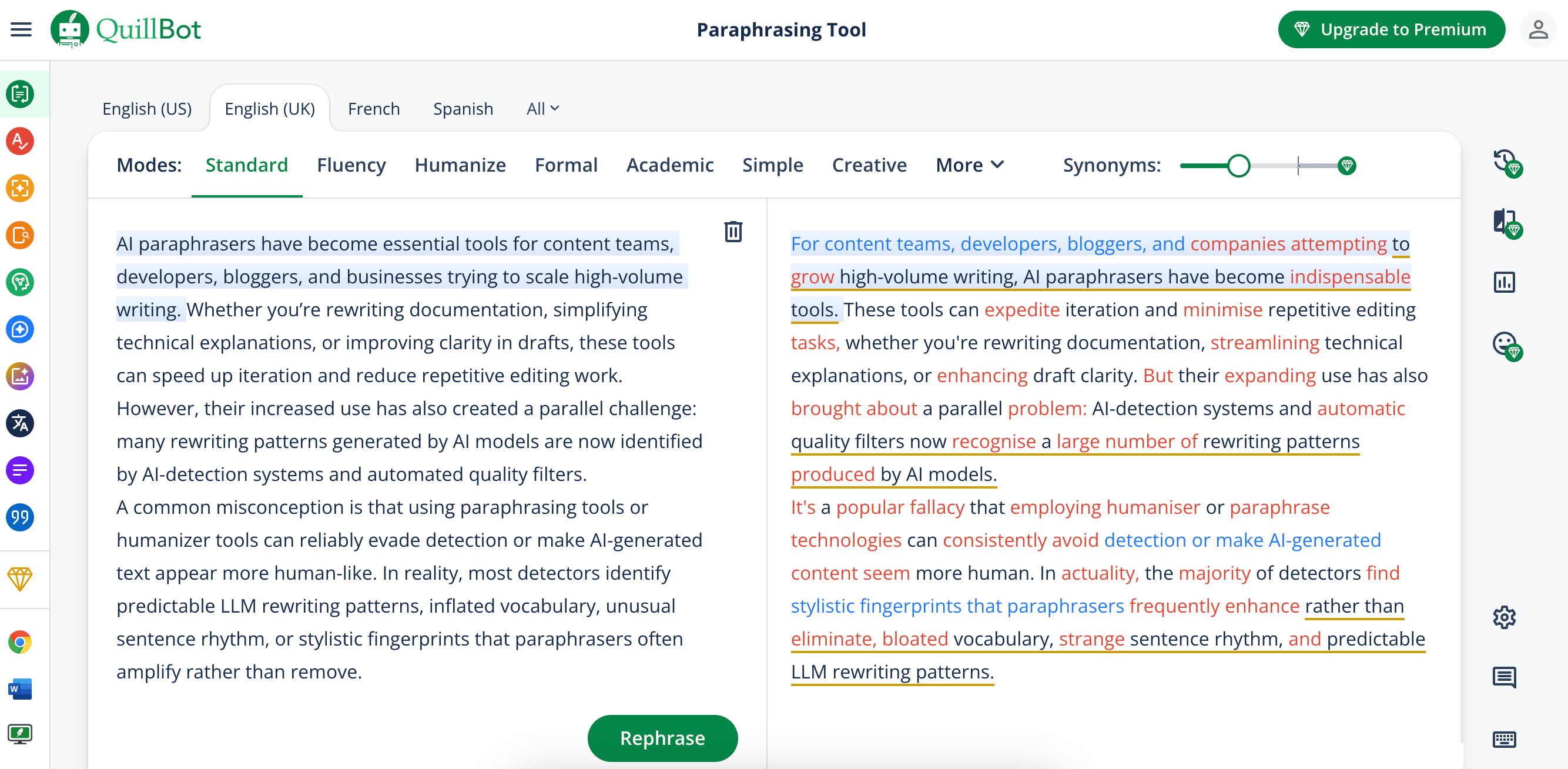
The tool supports 26 languages, which is helpful for users drafting in multilingual contexts. Overall, QuillBot’s strengths lie in clarity optimization and meaning preservation, making it well-suited for refining documentation, improving readability, and restructuring long-form content.
QuillBot key features:
-
It ensures tone consistency across entire documents and provides rewrite modes, including Standard, Formal, Academic, Shorten, and Expand, for precise control over rewrite intensity.
-
Integrated citation generator and summarizer, enabling users to paraphrase, cite, and condense research material in one workflow.
-
Bulk processing support for rewriting large blocks of text with consistent rules, useful for documentation cleanup or updating legacy content.
-
Free - $0. Includes fundamental rewriting with a 125‑word limit.
-
Premium - $5/month ($60/year). Includes unlimited paraphrasing, all rewrite modes, advanced grammar suggestions, and AI‑detection features.
-
Team - Custom pricing. Includes multi-user billing, data controls, and team collaboration support.
2. Wordtune for real-time sentence-level clarity improvements
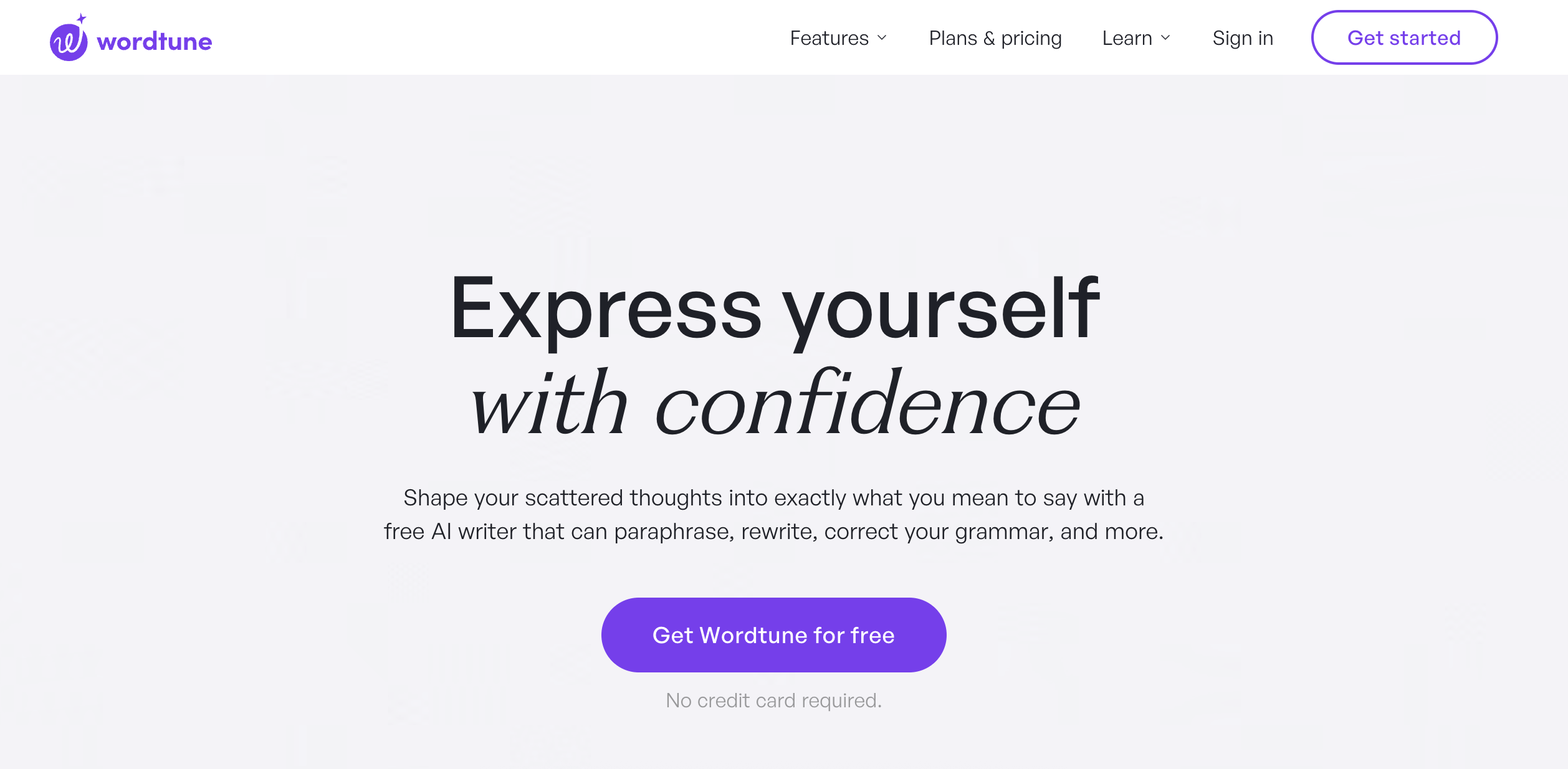
Wordtune launched in October 2020 as the first product from AI21 Labs, a company founded by a Stanford professor and the creator of Mobileye. It was designed to be a “co-writer, not just a copyeditor.” The application focuses on real-time rewriting and paraphrasing to improve the clarity, tone, and readability of everyday writing. It’s built as a writing assistant that suggests variations of your sentences during drafting, more so than after-the-fact paraphrasing. The tool excels at generating more natural, human-like alternative text, particularly for professional and academic purposes.
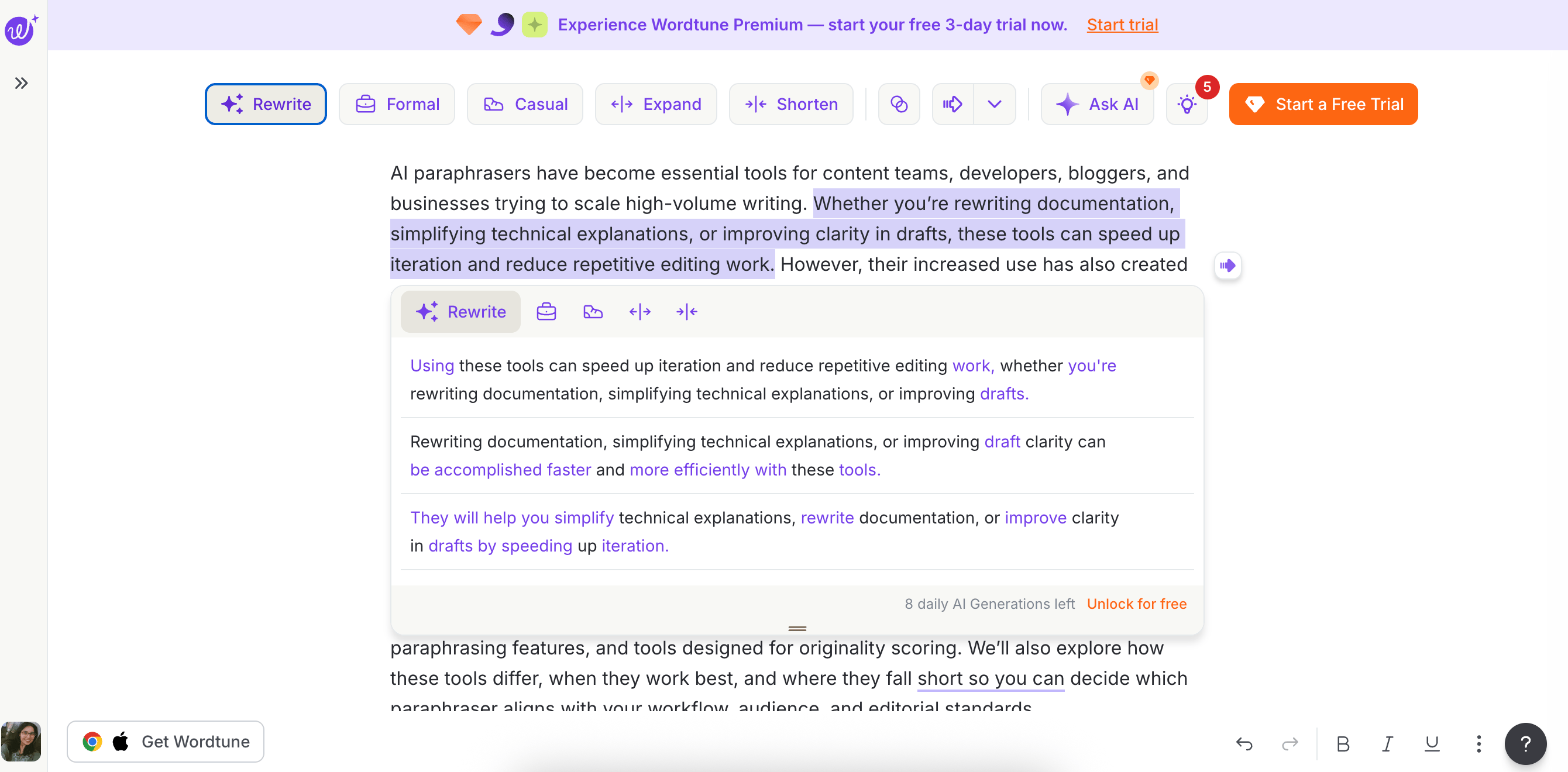
Wordtune uses the provided context about the content’s purpose to tailor its paraphrasing suggestions. For each sentence, Wordtune provides multiple rewrite options: formal, casual, shorter, or expanded. Use the Ask AI feature to improve readability or correct grammar. Wordtune is especially useful for writers who want to sound more concise, confident, or expressive without altering the original intent of their writing.
Wordtune key features:
-
Semantic rewrite engine that analyzes intent, not just wording, generating alternatives that preserve emotional tone and context.
-
Inline rewrite cards that surface suggestions directly inside the sentence you’re typing, no switching tabs or tools.
-
Context-bridging suggestions that help link ideas across sentences, improving flow in longer paragraphs.
-
Adaptive rewriting behavior that adjusts suggestions based on whether you’re drafting, replying to an email, or editing existing text.
-
Basic - $0. Includes 10 rewrites, 3 AI summarizations, and unlimited grammar checks.
-
Advanced - $13.99/month; $6.99/month ($83.88/year). Includes 30 rewrites, 15 summarizations, proofreading, and full grammar/spelling correction.
-
Unlimited - $19.99/month; $9.99/month ($119.88/year). Includes unlimited rewrites, summarizations, proofreading, clarity improvements, and priority support.
3. Jasper for brand-consistent marketing content at scale
Jasper was founded in 2021 by a team of former marketing agency owners at Proof who recognized an opportunity to leverage (then) GPT-3 for scalable content creation. What started as a tool for generating ad copy quickly expanded into a comprehensive AI marketing platform, raising over $125 million in funding and achieving unicorn valuation in under two years.
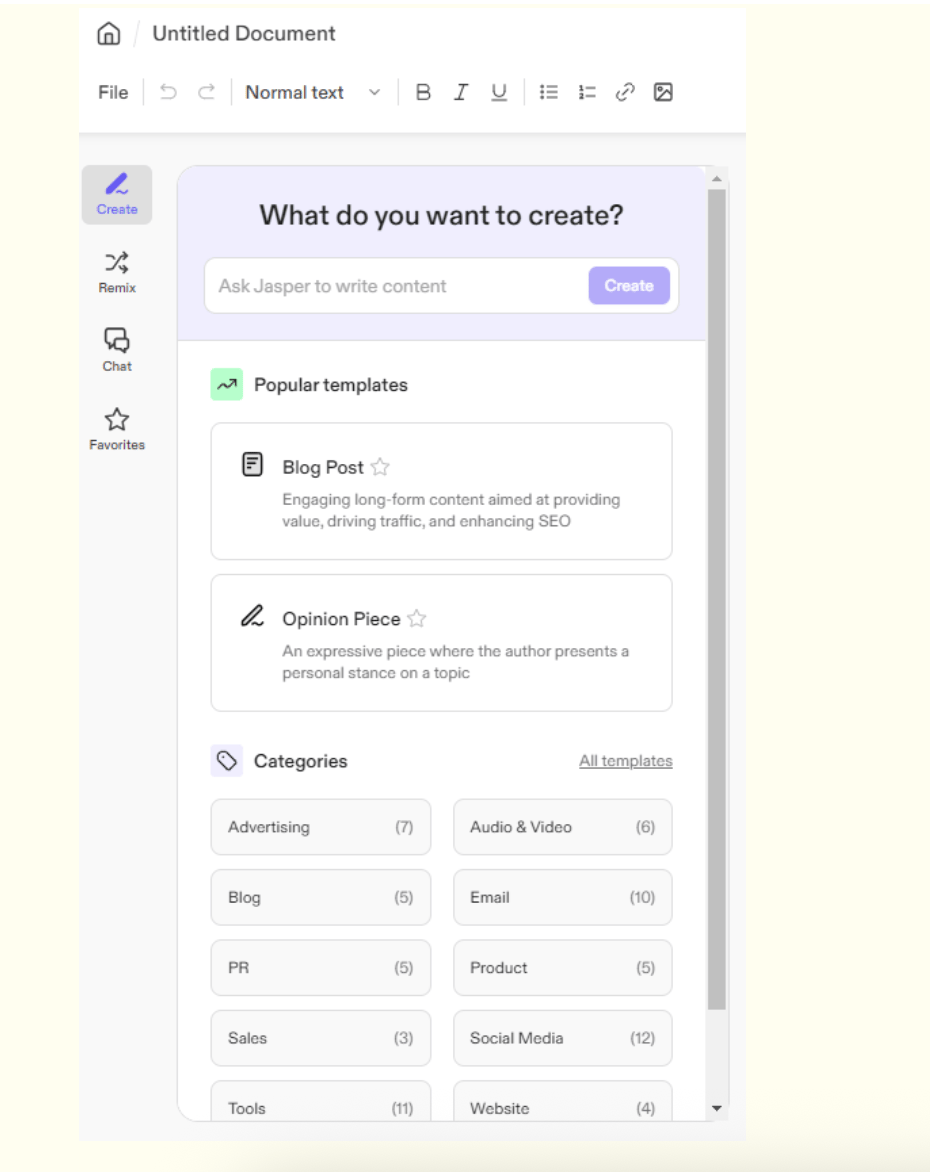
Its paraphrasing features sit within a broader tool suite that includes tone adjustment, campaign messaging, style guides, and SEO drafting. Jasper tailors rewrites to brand tone using saved style preferences, making it especially useful for teams with consistent voice requirements. Its rewriting capabilities are not as granular as dedicated paraphrasers, but the tool excels at maintaining tone continuity across campaigns, landing pages, and social content.
Jasper key features:
-
Brand voice memory and enforcement, ensuring rewritten text consistently reflects saved tone, style rules, and messaging guidelines.
-
Cross-channel consistency tools that adapt rewrites for ads, landing pages, blogs, and social posts while maintaining campaign coherence.
-
Template-driven rewriting workflows that embed paraphrasing into briefs and multi-step content production pipelines.
-
Collaboration-friendly editing for reviewing, refining, and versioning paraphrased content within shared workspaces and approval flows.
-
Pro - $69/month per seat; $59/month ($708/year). Includes comprehensive marketing‑oriented AI writing and paraphrasing workflows, brand voice controls, and team collaboration tools.
-
Business - Custom pricing. Intended for larger teams with API access, dedicated account management, and priority support, access to Jasper’s purpose-built marketing agents, and enterprise-grade governance: admin controls and groups.
Looking for more options? Check out our comprehensive guide to Claude assistant alternatives (including Jasper) to help you find the right AI assistant for your content creation, research, or productivity workflows
4. Superhuman (previously Grammarly) for tone-aware, context-sensitive document refinement
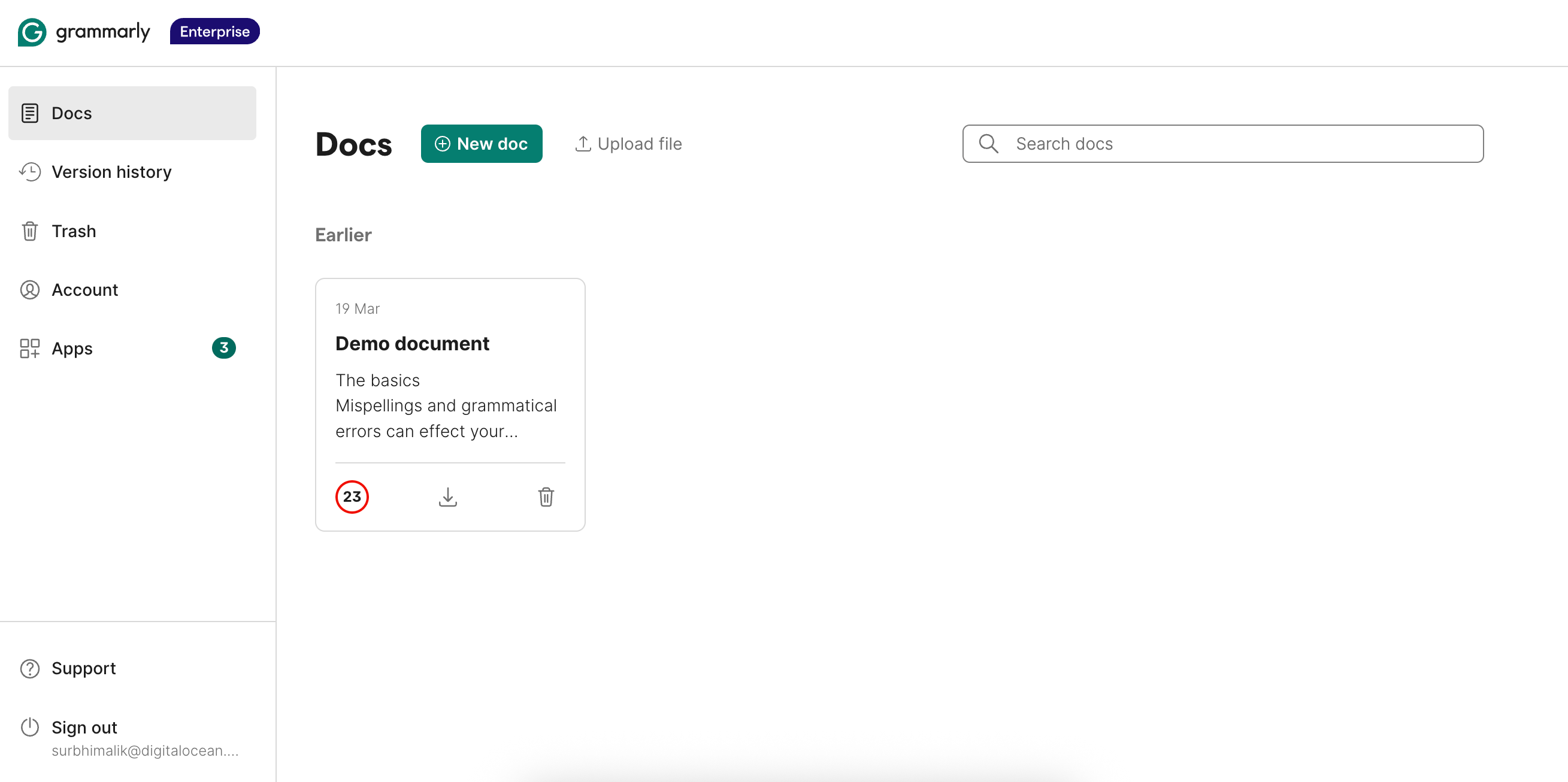
Grammarly (now Superhuman) launched in 2009 as an academic grammar tool and has since become one of the most recognized names in AI-assisted writing. After adding generative AI with SuperhumanGO in 2023 and acquiring both Coda and the Superhuman email client, the parent company rebranded in October 2025 as Superhuman, signaling a shift from a writing assistant to a broader productivity platform. Superhuman is widely used by professionals, students, and teams looking for stylistic consistency in emails, documents, and official communications. The real value of Superhuman is how it meets you where you already work. Its browser extension for Chrome, Safari, and Firefox provides real-time suggestions across the web, and dedicated add-ons for Google Docs and Microsoft Office mean you’re never copying and pasting into a separate tool.
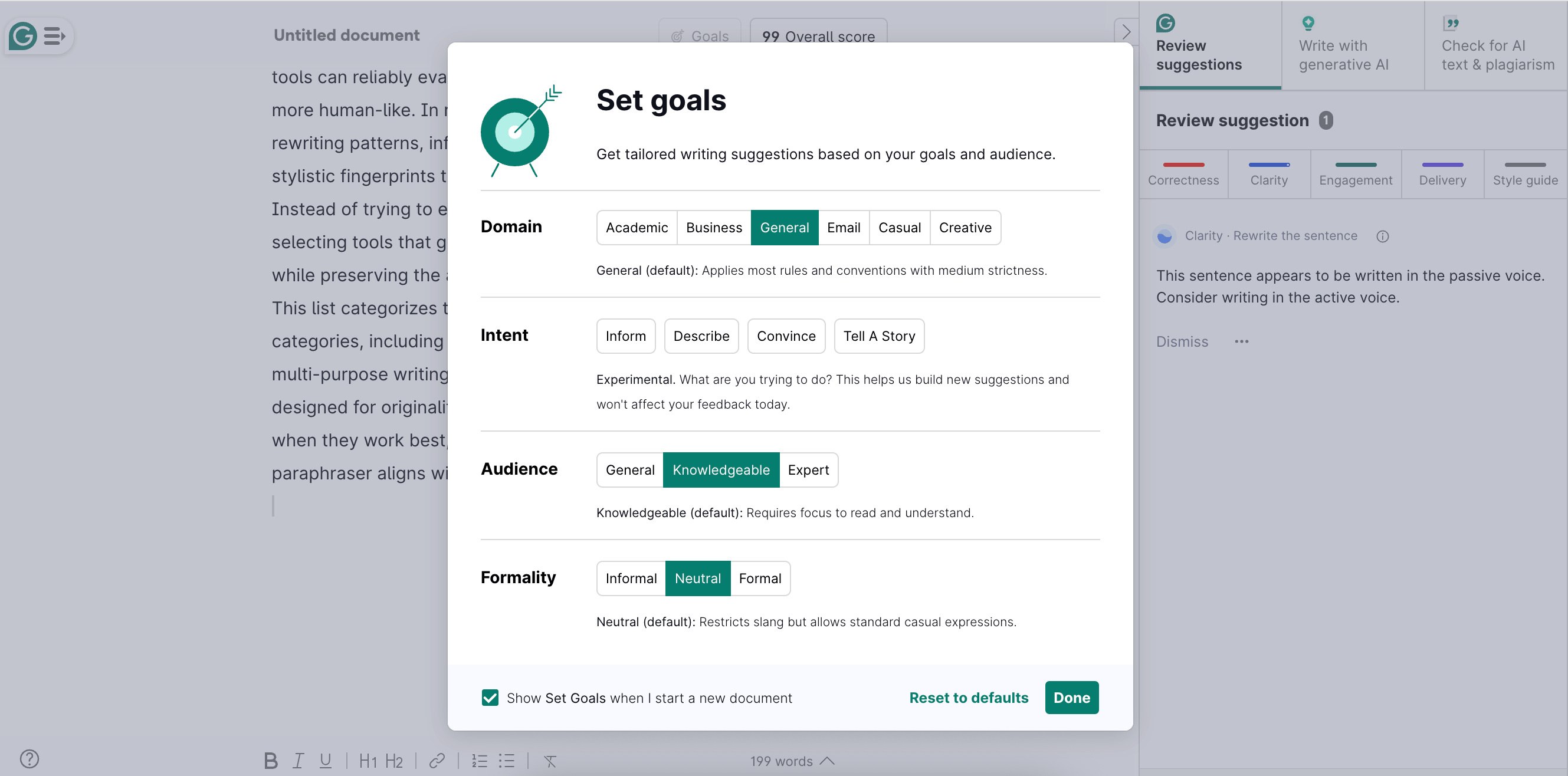
Its rewriting tools aim to refine meaning, improve flow, and reduce wordiness. Within Superhuman’s paraphrasing feature, you can set custom goals for each document and adjust them based on your writing needs. Superhuman’s paraphrasing is intentionally subtle, helping preserve accuracy and tone while minimizing the risk of introducing patterns that may trigger AI labelling.
Superhuman (previously Grammarly) key features:
-
Precision-focused rewrites that adjust clarity, brevity, and tone while preserving factual accuracy and original intent.
-
Real-time tone calibration that detects emotional cues in your writing and suggests subtle rewrites to sound more confident, polite, or formal.
-
Contextual clarity enhancements that restructure sentences for smoother flow are beneficial in long emails or policy-style documents.
-
Deep ecosystem integration across browsers, desktop apps, and office tools, enabling consistent rewriting during everyday communication.
Superhuman (previously Grammarly) pricing:
-
Free - $0. Includes basic grammar and tone suggestions and a plagiarism checker.
-
Pro - $11.09/month; $27.8/month ($133.08/year). Adds fluency rewrites, unlimited personalized suggestions, AI‑based paraphrasing, and document tone adjustments.
-
Enterprise - Custom pricing. Offers team management, advanced compliance features, and organization‑wide support.
5. Originality.ai for originality scoring and plagiarism prevention
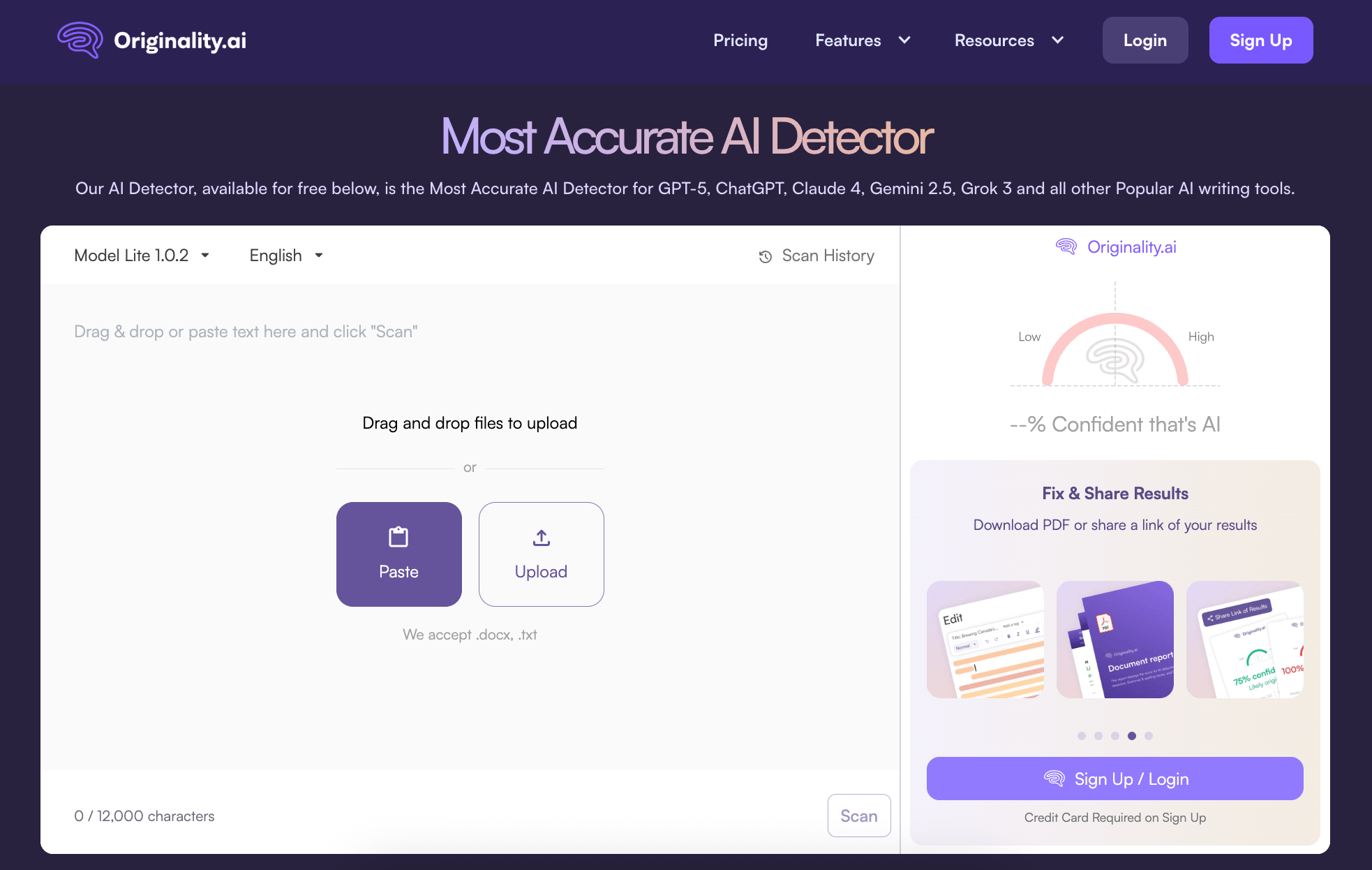
Originality.ai is primarily an AI detection and plagiarism scoring platform. It includes a light paraphrasing tool, mainly used to correct repetitive or low-quality AI-generated phrasing rather than rewriting entire documents. Its rewrite suggestions focus on clarity, coherence, and reducing patterns that commonly trigger AI detection without altering sentence structures aggressively. Originality.ai is primarily used by editors, publishers, and content teams that want to verify the originality of content before publishing. Its rewriting tool is intentionally conservative to avoid distortion of meaning.
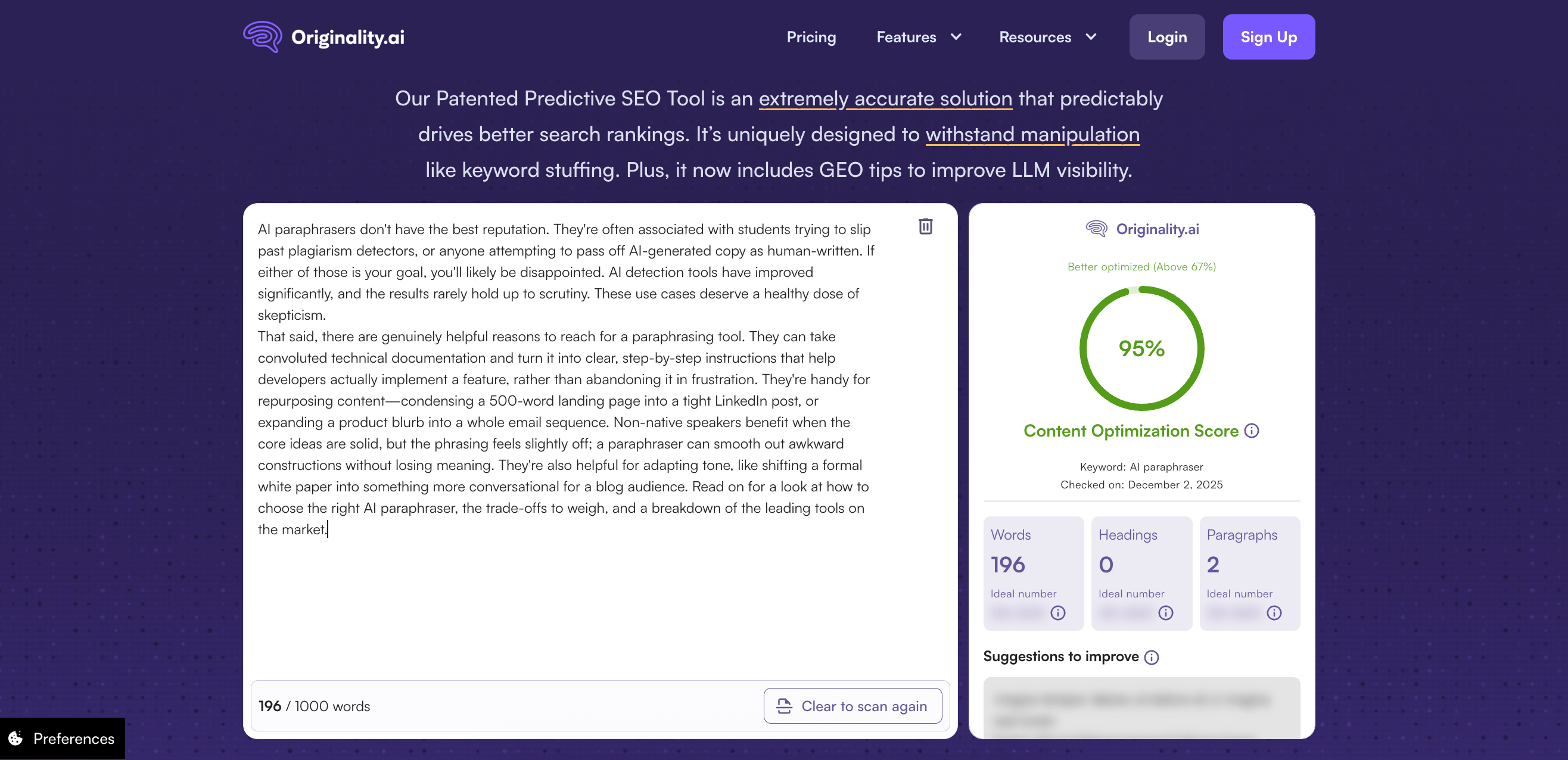
The Content Optimizer feature supports up to 1,000 words per analysis and allows users to either paste content directly or upload full-length documents.
Originality.ai key features:
-
Editable rewrite flags for users to manually highlight sections they want the tool to refine.
-
Threshold-based rewrite controls to set custom originality or quality benchmarks that trigger targeted rewriting prompts.
-
Editor workflow integrations that enable reviewers to leave comments, track changes, and compare original versus refined content within the same interface.
-
Team-level audit trails, providing a record of what was rewritten, by whom, and why, are helpful for compliance-focused publishers and agencies.
-
Pay-as-you-go - $30 one-time payment with 3000 credits. Includes initial credit bundle for AI detection, plagiarism checks, and readability analysis.
-
Pro - $12.95/month with 2000 credits/year. Includes recurring credit allotments and standard support.
-
Enterprise - $136.58/month with 15,000 credits. Includes high-volume credits, extended history, API access, and dedicated support.
Dedicated rewriting engines
These platforms focus on paraphrasing and bulk content transformation. They typically offer deeper structural rewrites, multiple output variations, and high-volume processing. They work best for large content batches but likely require manual review to maintain accuracy.
6. Smodin for multilingual content creation and AI detection
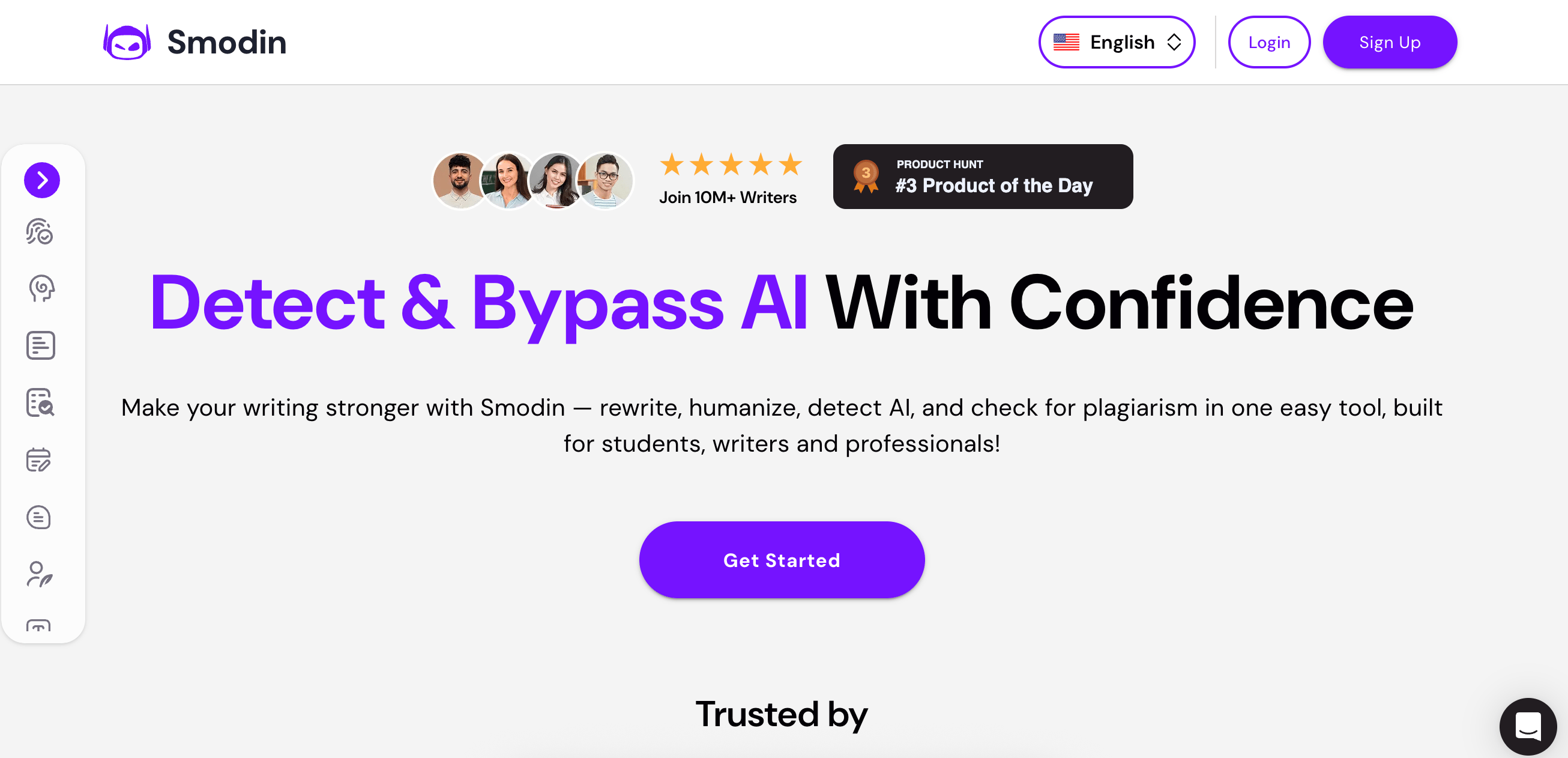
Smodin is a multilingual AI writing assistant that helps users automatically produce original, readable text. It offers tools for rewriting, paraphrasing, content generation, plagiarism detection, AI content detection, summarization, and citation generation. The platform supports over 100 languages, making it useful for global users who wish to translate and rewrite existing text. Smodin offers AI writing, plagiarism checking, and citation tools in one interface, making it useful for students, researchers, creators, and professionals. Its broad toolset and flexibility make it a good fit for workflows that involve writing, translation, academic work, or content publishing across languages and formats.
Smodin optimizes writing tasks by demonstrating its core features: paraphrasing, plagiarism detection, and AI content checks. Paste your text, pick a tool, and instantly get a polished, ready-to-use result.
Smodin key features:
-
OCR-based image-to-text paraphrasing enables users to extract text from screenshots, images, or PDFs and instantly rewrite it into polished content.
-
AI-content detection flags sentences likely generated by AI models to help maintain originality.
-
Custom workflow templates enable automation of recurring tasks, including batch paraphrasing and summarization.
-
Writing - $8.10/month; $8.10/month ($97.20/year). Includes basic paraphrasing, writing tools, summarizer, and a 7-day limited trial to use the Chrome extension.
-
Reviewing - $14.50/month; $14.50/month ($174/year). Adds AI‑detection, plagiarism checking, translation, chat, and grading tools.
-
Ultimate - $17.35/month; $17.35/month ($208.20/year). Includes full access to the Chrome extension, plus all writing and reviewing features.
7. Spin Rewriter for high-volume article diversification and SEO optimization
Spin Rewriter is a cloud-based AI article rewriting tool that utilizes its proprietary ENL Semantic Rewriting technology, which helps generate more accurate and coherent spun content. This technology transforms a single article into multiple unique, readable versions. The platform rewrites full articles with a single click, maintaining context and meaning rather than just swapping words, which helps preserve readability and avoid detectable AI patterns. It can produce up to 1,000 variations per input for bulk paraphrasing, which helps scale content workflows but may also lead to more output than teams realistically need to review.
Spin Rewriter’s three-step workflow includes pasting your text, hitting “One-Click Rewrite,” and instantly exporting multiple unique versions. Its semantic rewriting stands out amidst other AI paraphrasers because your content stays coherent, natural, and more sophisticated than basic synonym swapping:
Spin Rewriter key features:
-
Automatic synonym sensitivity tuning allows users to control how aggressively the tool substitutes words to maintain more natural phrasing.
-
Document-level coherence checks that detect when rewritten sections stop flowing logically, prompting adjustments before exporting.
-
Rewrite freeze rules that enable users to lock specific terms, brand names, or technical words so they remain unchanged across all variations.
-
Generational spin layering enables users to create multiple rewrites from the original content without repeating earlier outputs.
-
Monthly - $47/month. Unlimited article rewriting using ENL semantic rewriting and batch spinning.
-
Yearly - $16.42/month ($77/year). Same features as the Monthly plan, billed annually.
-
Lifetime - $497 one-time payment. Includes lifetime access to the ENL rewriter and all features.
8. Linguix for fast, in-browser sentence rewrites and workflow shortcuts

Linguix is a lightweight AI writing assistant designed for fast, sentence-level paraphrasing across browsers, documents, and online editors. Similar to tools like Grammarly or Wordtune, it offers quick and concise rewrite suggestions, working directly inside Google Docs, Gmail, CMSes, and most web text fields. Outputs are predictable, clean, and suited to everyday writing tasks rather than heavy, long-form rewrites.
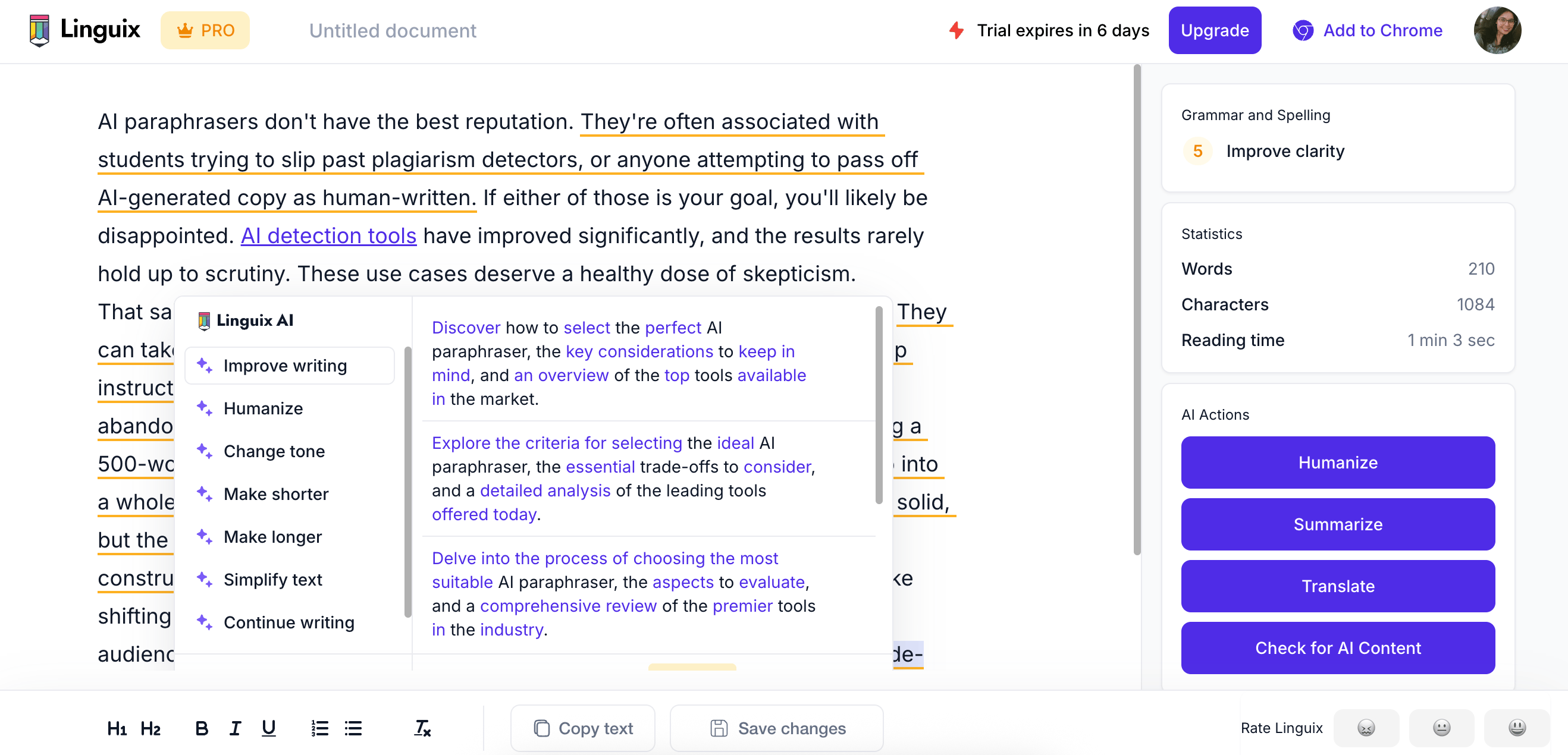
Linguix is an easy-to-use AI paraphrasing platform. The tool generates multiple sentence variations that users can select and insert directly into their drafts. It also provides word count, character count, and estimated reading time to support quick content checks and light editorial refinement. Overall, Linguix is a practical choice for fast paraphrasing and surface-level quality improvements.
Linguix key features:
-
The Sentence Rewrite Engine generates up to five targeted alternatives per sentence, offering options such as improving writing, humanizing, shortening, expanding, and simplifying.
-
Contextual rewrite triggers highlight problematic phrases (e.g., filler words, redundancies, awkward transitions) and surface rewrite options directly in-line.
-
Advanced Snippets enable users to create reusable, dynamic templates with variables (e.g., {name}, {date}) for faster, repetitive writing workflows.
-
Writing Insights Dashboard provides document metrics on readability, sentence length, redundancy rate, and editing patterns to guide improvements.
- Monthly - $30/month; $11.67/month ($140/year). Includes grammar checking, paraphrasing, typing shortcuts, and AI-in-browser assistance.
AI paraphrasers FAQs
What is an AI paraphraser?
An AI paraphraser is a writing tool that rewrites text by restructuring sentences, replacing phrases, and enhancing clarity while preserving the original meaning. It’s commonly used for editing, content refreshing, and simplifying complex text.
How does an AI paraphraser work?
These tools use NLP models to analyze sentence structure, context, and intent, then generate new phrasing that conveys the same idea. Some rely on simple synonym replacement, while others use large language models for more natural rewrites.
Are AI paraphrasers better than manual rewriting?
AI paraphrasers can speed up early drafts and bulk edits, but they’re not a substitute for human judgment. While great for quick rewrites, they still lack the nuance, precision, and stylistic intent that manual rewriting provides, especially for high-stakes, technical, or brand-sensitive content where accuracy truly matters.
What are the best AI paraphrasing tools in 2026?
Top options vary by use case. QuillBot and Wordtune excel at clarity-focused rewriting, while Spin Rewriter handles bulk rewriting. Jasper and Superhuman (previously Grammarly) provide more comprehensive writing assistance. Originality.ai provides rewrite guidance alongside detection scoring.
Can AI paraphrasers maintain the original meaning of content?
Yes, especially model-based tools designed for semantic rewriting. However, meaning can drift when the tool performs heavy rewrites or relies on aggressive synonym spinning, so human review is still recommended.
Build with DigitalOcean’s Gradient™ Platform
DigitalOcean Gradient™Platform makes it easier to build and deploy AI agents without managing complex infrastructure. Build custom, fully-managed agents backed by the world’s most powerful LLMs from Anthropic, DeepSeek, Meta, Mistral, and OpenAI. From customer-facing chatbots to complex, multi-agent workflows, integrate agentic AI with your application in hours with transparent, usage-based billing and no infrastructure management required.
Key features:
-
Serverless inference with leading LLMs and simple API integration
-
RAG workflows with knowledge bases for fine-tuned retrieval
-
Function calling capabilities for real-time information access
-
Multi-agent crews and agent routing for complex tasks
-
Guardrails for content moderation and sensitive data detection
-
Embeddable chatbot snippets for easy website integration
-
Versioning and rollback capabilities for safe experimentation
Get started with DigitalOcean Gradient™ Platform for access to everything you need to build, run, and manage the next big thing.
About the author

Surbhi is a Technical Writer at DigitalOcean with over 5 years of expertise in cloud computing, artificial intelligence, and machine learning documentation. She blends her writing skills with technical knowledge to create accessible guides that help emerging technologists master complex concepts.
Start building today
From GPU-powered inference and Kubernetes to managed databases and storage, get everything you need to build, scale, and deploy intelligent applications.
